Inspiring a New Generation of Inventors in the North East
The Project
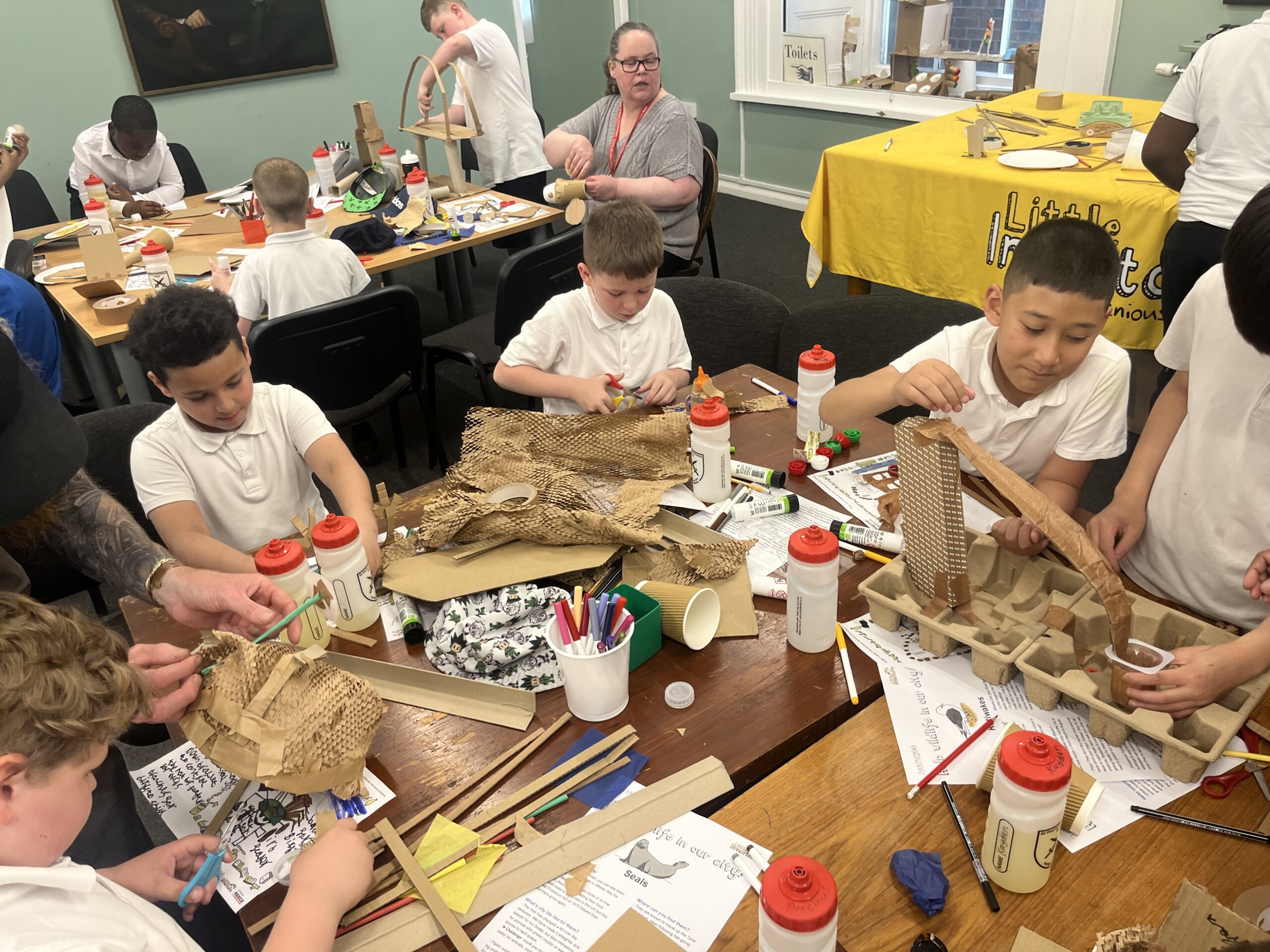
To mark the 200th Anniversary of The Lit & Phil Library in Newcastle, Little Inventors invited children from Newcastle schools to come up with invention ideas inspired by the library’s book collections. Funded through The Reece Foundation, this pilot school engagement programme saw children take on an almighty challenge: how to help wildlife thrive in their busy city. From over 100 ideas generated, three were brought to life by professional makers and exhibited at the Lit & Phil for all to enjoy.
Timeline
Summer Term 2025
Project Partners
The Lit & Phil
Little Inventors
The Reece Foundation
Schools Involved
- Gosforth East Middle School
- St Paul’s C of E Primary School
Key Goals
- To nurture children’s creative confidence and problem-solving skills
- To practice literacy, drawing and making skills in a fun-filled, cross-curricular environment
- To grow pupil’s knowledge of city planning and the impact of urbanisation on wildlife
- To grow awareness of the Lit & Phil as a place of invention, imagination and public creativity – past, present and future, across the North East.
The Inspiration
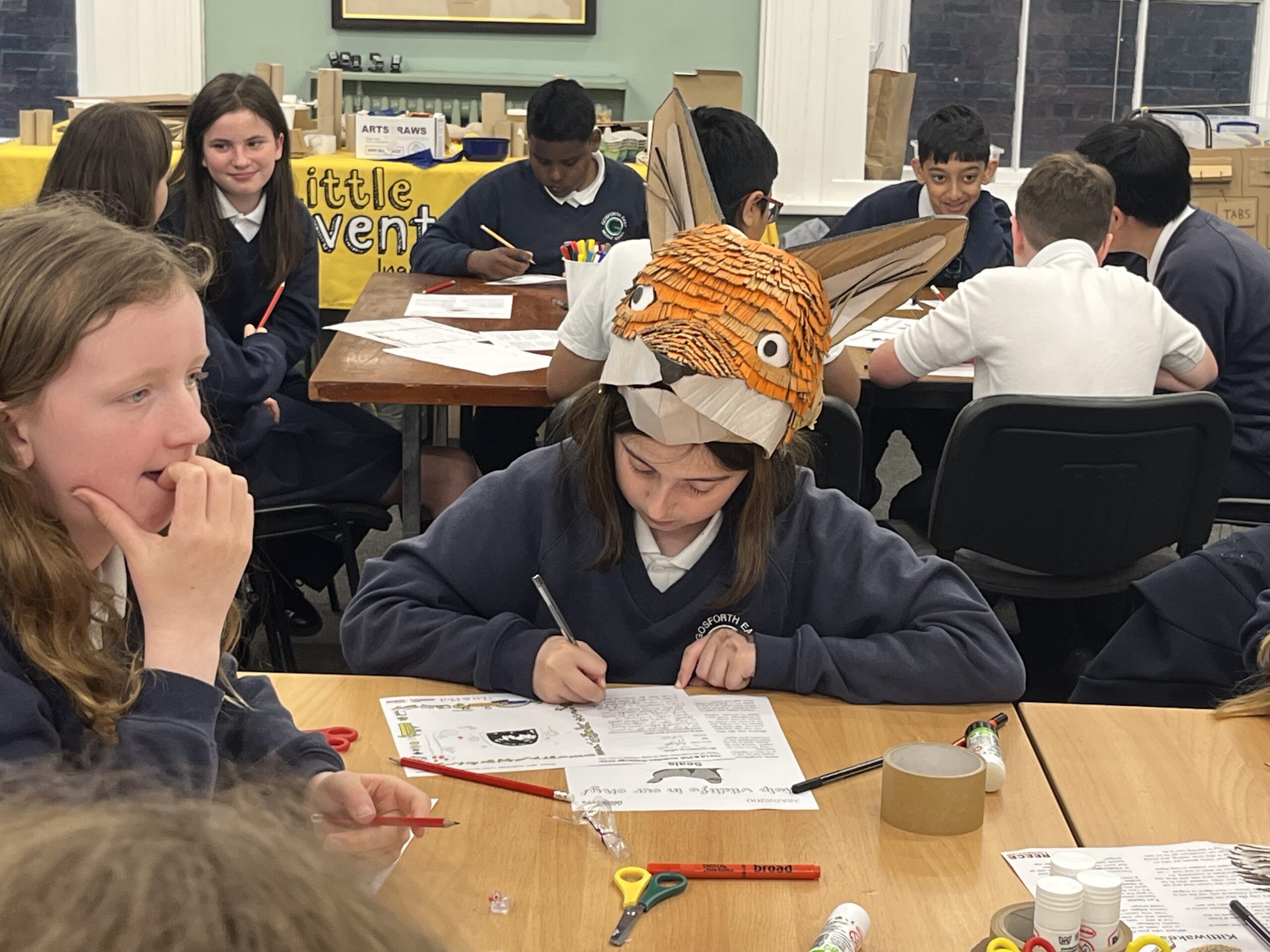
In May 2025, the Lit & Phil hosted four inspiring workshops in its learning space, with over 100 children participating. Taking inspiration from books on display and a presentation bringing the collections to life, children were invited to draw their own invention ideas, before prototyping them using cardboard and recycled materials.
Participating children designed and prototyped incredibly innovative concepts such as multi-species habitat streetlamps, innovative safe animal crossings, floating islands for seals, and reimagined green cityscapes.
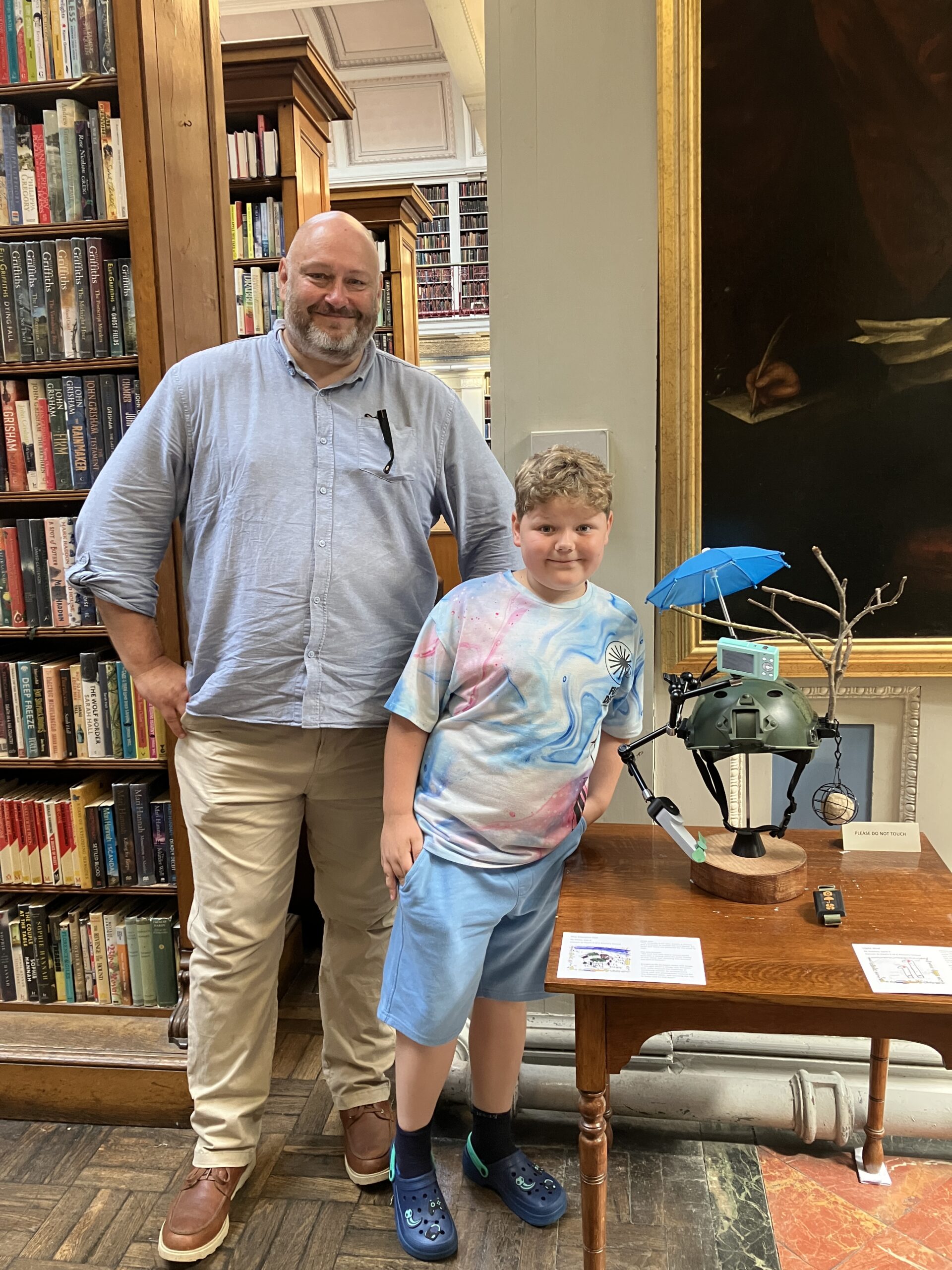
The three winning ideas were brought to life by professional makers from the region, contributing to the local creative economy and presenting the children with creative career pathways. Two of them met their designers on a zoom call to provide further information about their concepts, whilst another one participated in a studio visit and contributed directly to the making of parts of her idea.
Following this successful pilot project, Little Inventors has secured funding from The Reece Foundation for a three year programme to enable outreach to continue across Northumberland and the wider North East. To find out more about the 2026 project, please click here: Little Inventors 2026 Project
Photo – Winning inventor Ethan, aged 9,with his Decision Hat, which was brought to life by Sunderland Maker, Carl Gregg.
Outcomes
Inspiring children to solve problems through creative thinking
Over 100 children participated, creating an invention drawing and then building cardboard prototypes of their ideas, which was a hands on way for them to be creative and think about how their design might work in reality.
Experiencing Cross-Curricular Learning
Teachers praised the quality of the workshops and their cross-curricular approach to learning, merging History, Natural Sciences, Design and Technology with Art.
Raising awareness of an historic organisation
The children enjoyed the opportunity to think laterally and creatively about a contemporary challenge in an exciting historic setting. Many of the pupils had never visited the Lit & Phil before and were keen to share this with their families for potential future visits.
Future Development
Following the success of this pilot programme, a further three years of engagement has been funded by the Reece Foundation. In the next academic year, Little Inventors will be working with Northumberland schools and will be taking part in outreach sessions across the North East.
Impact
Find Out More
Take a look at our projects and find out how to get involved!



Northumberland Students Discover! Creative Careers at Queen’s Hall Arts Centre
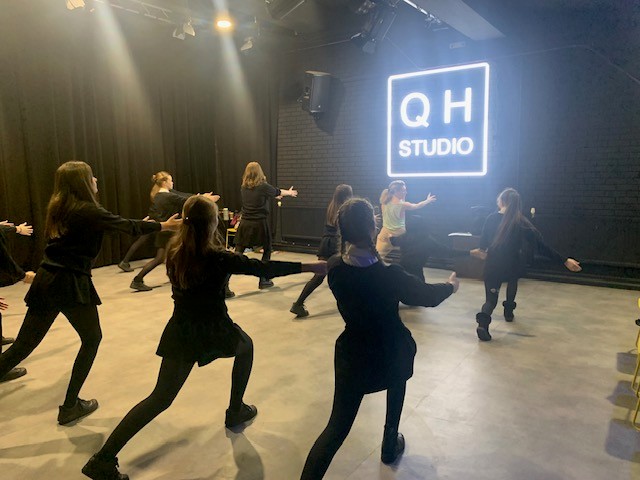



In February 2025, Queen’s Hall Arts Centre ran the first Discover! Creative Careers Carousel for Northumberland, in partnership with North East Combined Authority.
Eight Schools across the county brought groups of Y9 students to take part in interactive workshops with creative professionals, to offer an insight into the range of careers available in the creative sector.
Timeline
February 2025
Project Partners
Artists
Backstage Builders CIC, Emma Tominey, Kristin Kelly Abbot, Over the Winks, Novo Theatre, Newcastle College, Northumbria University, Queen’s Hall Arts Centre
Project Coordinator
Helen Mills, Queen Hall Arts Centre,
Kathryn Henderson and Hannah Gow, North East Combined Authority
Schools Involved
- NCEA Duke’s Secondary School
- Queen Elizabeth’s High School
- Duchess’ Community High School
- King Edward VI School
- Hillcrest Cramlington
- Cramlington Learning Village
- Haydon Bridge High School
- Blyth Academy
Key Goals
- Young people to feel inspired about the possibilities of working creatively and view this as a potential career option
- Students to gain experience in working with professional artists
- Students to have a deeper understanding of different routes into creative careers
North East Combined Authority and Discover! Creative Careers organised a series of ‘Career Carousel’s’ across the North East, to inspire children to explore creative careers and show them how the things they love to do can translate into a career. In Northumberland, students were invited to Queen’s Hall Arts Centre to enjoy an engaging, hands-on day with professional creatives, gaining real insight into what a day in their career is really like.
Workshops
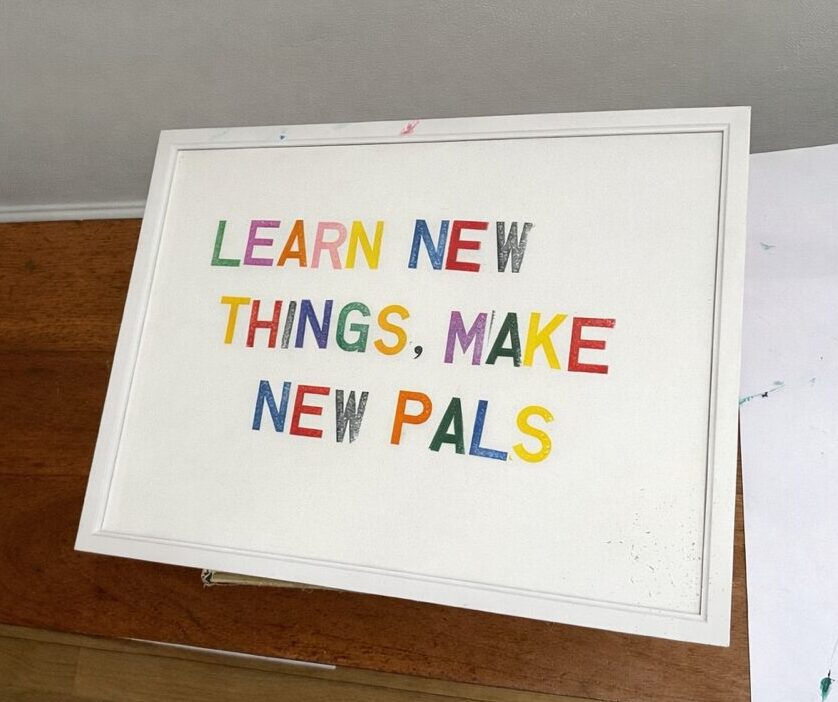
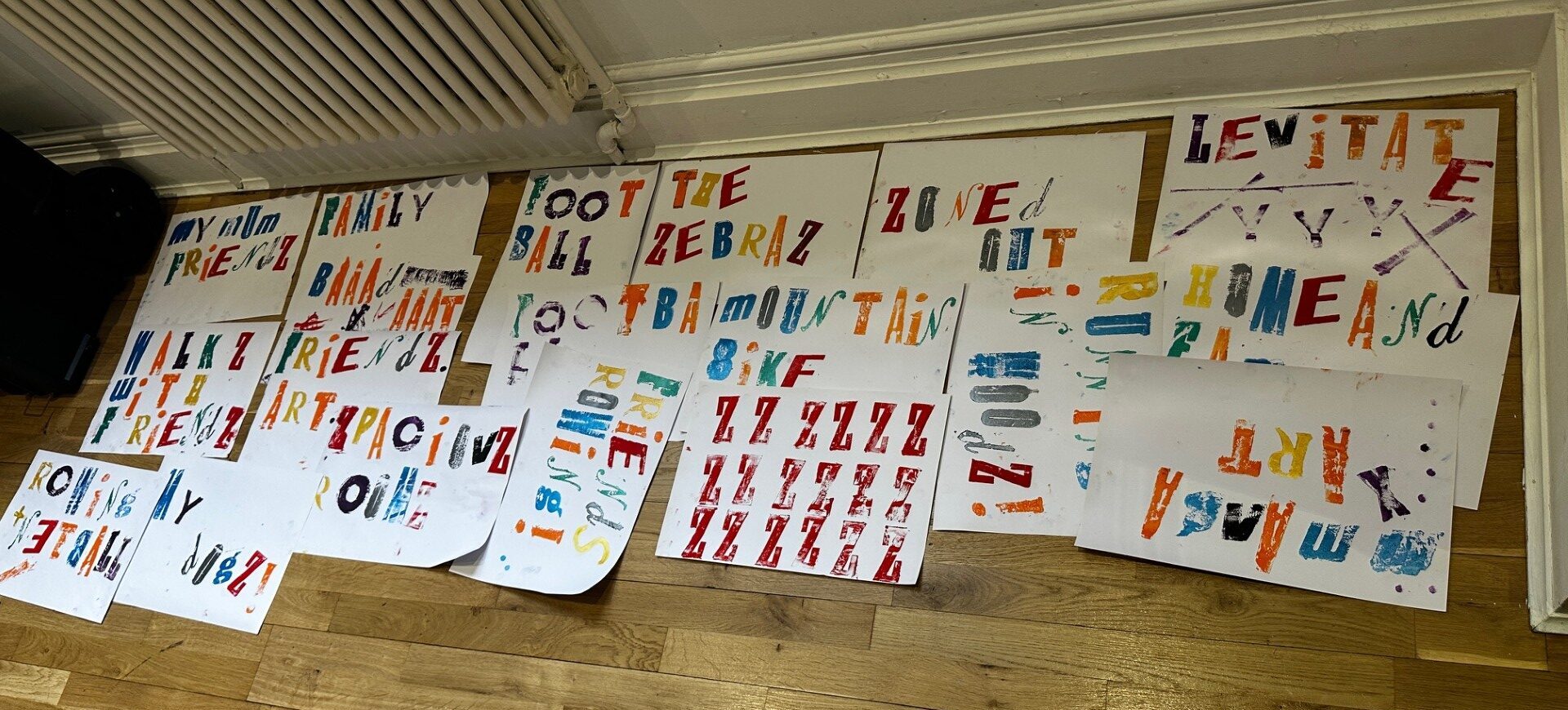
Northumberland schools were invited to bring groups of Year 9 pupils to participate in three hands on workshops with creative professionals. Workshops included a screen printing workshop with Creative Producer and Multimedia Participatory Artist, Emma Tominey, an introduction to scenic arts and prop-making with Backstage Builders CIC, an interactive dance workshop with dancer and choreographer, Kristin Kelly Abbott and an introduction to theatre in unusual places, with Novo Theatres.
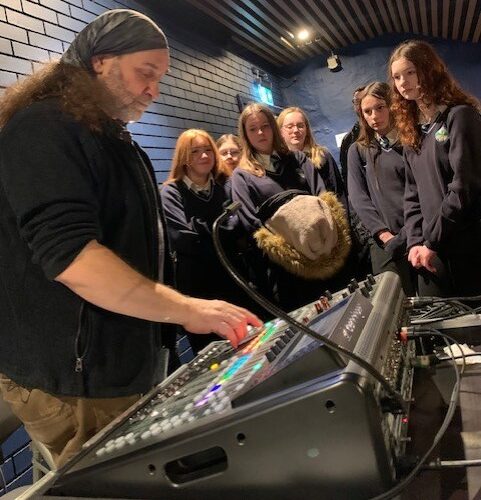
Some groups were able to try out the light and sound equipment with Queen’s Hall technicians, as well as attending an introduction to gallery curation, and a demonstration of stage and special effects makeup by Over the Winks.
The Panel
At the end of the workshops, pupils attended a panel discussions with Creative Director of Queen’s Hall, Katy Taylor, Helen Driver, curriculum lead of Art at Newcastle College, Steve Gilroy from the School of Design, Arts and Creative Industries at Northumbria University and Trish Mayes, from Backstage Builders CIC. The panel was led by playwright Garry Lyons, and gave students the opportunity to ask questions about different pathways into the arts and creative industries, such as apprenticeships, college courses, university degrees, or more unconventional routes into the sector.
Outcomes
Inspiring Northumberland pupils with Creative Careers opportunities
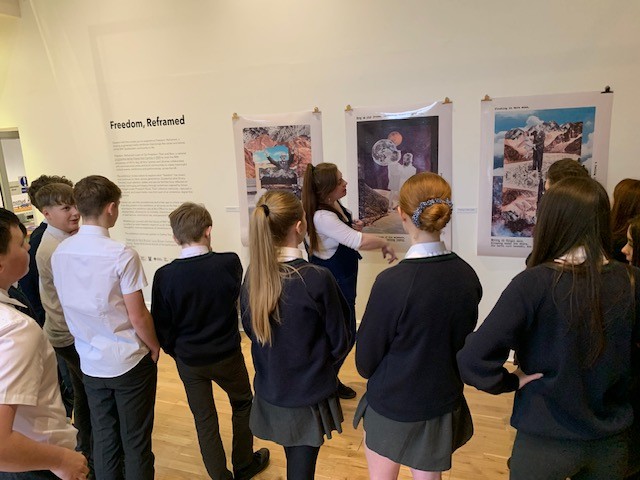
Eight Northumberland schools sent pupils from across the county with a total of 209 young people taking part in the interactive workshops. Many of the young people had not realised that there were jobs in some of the disciplines they tried and left saying they would look into this in future.
Demonstrating a range of careers across creative industry
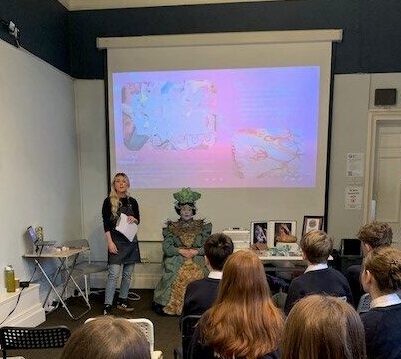
Representatives from eight different areas of creative industry held workshops for pupils. These included theatre production, visual arts, sound and lighting, stage make up, gallery curation, stage artistry, film production and choreography.
Showcasing different routes into creative careers
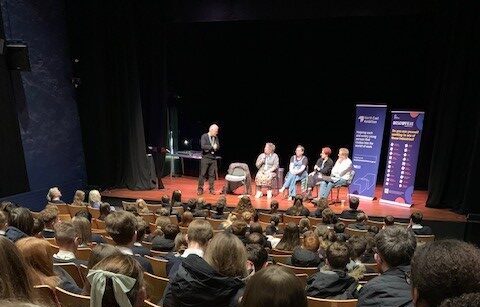
The panel comprised of a range of professionals, the Creative Director of Queen’s Hall Arts Centre, Katy Taylor, Managing Director of Backstage Builders CIC, Playwright and Panel Chair Garry Lyons, Art and Design Curriculum Leader for Newcastle College, Helen Driver, and Director of Public Programme from the School of Design, Arts and Creative Industries at Northumbria University, Steve Gilroy. This ensured a wide spread of insight into different routes into industry, from the traditional academic routes, through to apprenticeship and complete career change.
Impact
Find Out More
Take a look at our projects and find out how to get involved!
VE Day 80th Celebrations Tea Dance workshops with schools around Berwick

Over 200 school pupils from Berwick-upon-Tweed collaborated with creatives and subject experts to explore WWII and the significance of VE Day through two interactive workshops. The first, an in-school session, focused on life during the war both at home and abroad. The second, a Tea Dance workshop held at The Gymnasium Gallery, brought history to life through movement, as pupils learned two classic 1930s dances. This engaging approach not only commemorated the 80th anniversary of VE Day but also reinforced classroom learning in a dynamic and memorable way.
Timeline
April 2025- May 2025
Project Partners
Artists
Oli Brooks – Dance Artist and Choreographer
Organisations
The Maltings (Berwick) Trust
Berwick Record Office
King’s Own Scottish Borderers Museum
Schools Involved
- Allendale Primary School
- Scremerston School
- Berwick Middle School
- Tweedmouth West First School
- St Mary’s First School (Berwick)
- Holy Trinity C of E First School
- Spittal Community First School
- St Mary’s First School (Norham)
- St Cuthbert’s First School
- The Grove SEND School
- Tweedmouth Prior Park First School
Key Goals
- To increase pupils’ understanding of WWII history
- To celebrate VE Day 80th Anniversary in an engaging and interactive manner
- To build stronger connections between schools and local artists
- To allow pupils to have an opportunity to be creative with movement
The Maltings (Berwick) Trust’s creative engagement team delivered a series of workshops through April to May, working alongside Living Barracks Partners Berwick Archivist, Linda Bankier and King’s Own Scottish Borderers’ Veteran, Education and Outreach Officer, Peter McCutcheon.
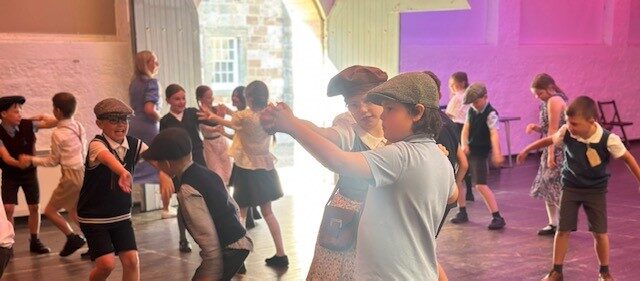
The Dance workshops were delivered by West End performer Oli Brooks, and the team engaged with 10 local schools in a participatory workshop programme to commemorate VE Day 80th anniversary and inspire learning about WWII. The workshops were adapted towards the level of ability, and included pupils with additional support needs, ranging through the different year groups resulting in each class receiving a tailored educational experience. Despite initial time constraints, the collaboration was highly successful and led to pupils learning and engaging in with topic and with dance in a practical and interactive manner.

Outcomes
Over 210 pupils participated in the VE Day workshops
Increased student confidence in discussing topics relating to WWII
Strengthened links between the schools and local artists
Over 210 pupils learned a new skill of tea dancing
Impact
Find Out More
Take a look at our projects and find out how to get involved!
Students make Berwick Shine

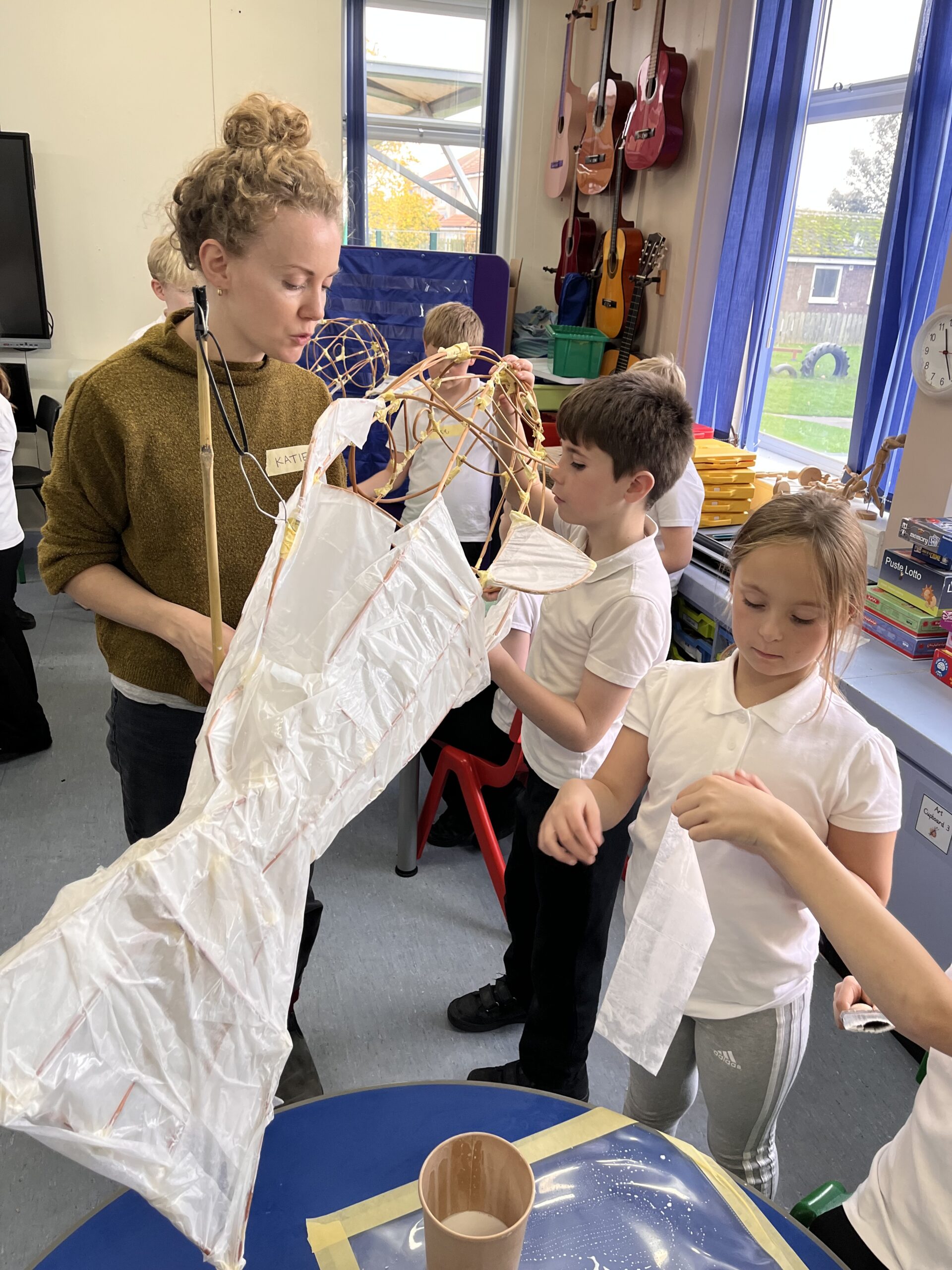
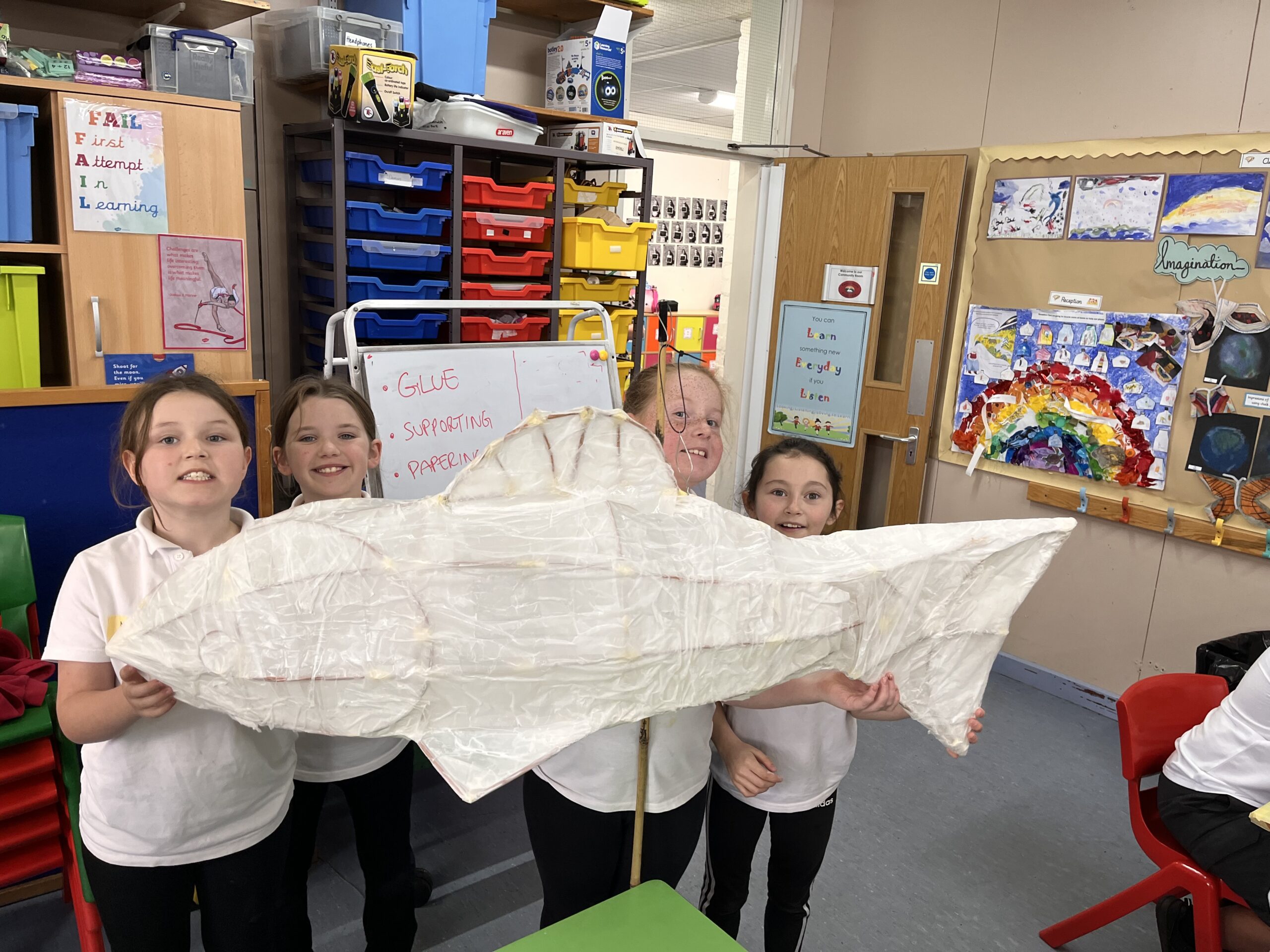
Five schools in Berwick upon Tweed worked with artist Martha Ellis and The Maltings (Berwick) Trust to create a shoal of willow salmon lanterns that lit up the town over winter.
Inspired by the medieval tradition of lanterns in the town detailed in historic documents in the archives as far back as 1604, and the tradition of salmon fishing on the River Tweed, the project combined history, heritage and creativity with opportunities for showcasing lanterns across the town to light up Berwick during the winter months.
Funding for the project was provided by Arts Council England, through the UK Government’s Cultural Development Fund.
Timeline
November 2024 – January 2025
Project Partners
Artists
Martha Ellis
Organisations
The Maltings (Berwick) Trust
Berwick Record Office
King’s Own Scottish Borderers Museum
English Heritage
Schools Involved
- Tweedmouth Prior Park First School
- Berwick Academy
- St Cuthbert’s RC First School
- Tweedmouth Community Middle School
- The Grove SEND School
Key Goals
- To increase pupils’ understanding of local heritage and history
- To allow pupils to explore technical 3D construction at scale
- To build on teamwork within the school setting
- To build stronger connections between schools, artists and community
- To showcase creative outputs across the town
The Inspiration
The project emerged from an artist call-out for The Living Barracks project, a multi-partner programme to restore and redevelop Berwick Barracks including a cultural development strand of artist-led residencies and commissions which is produced by The Maltings (Berwick) Trust. The proposal from Martha Ellis combined large scale sculptural techniques with visible and inspiring outcome.
The project took place across 5 different schools from Year 4 to Year 12 pupils. The artist adapted workshop methods to the level of ability some classes worked in teams to make one lantern, older pupils worked on individual pieces and pupils with additional needs focused on sensory elements to build collaborative lanterns.
Outcomes
Pupil Participation
98 pupils across 5 schools participated in workshops and created a total of 37 large salmon lanterns
Strengthening links in the community
The project strengthened existing links and created new links with schools and teachers and created new links with local businesses who hosted lanterns over the Christmas period complete with an interactive town trail
Building new traditions in Berwick
Lanterns were carried by school pupils in a community lantern procession to mark the switching on of the town’s Christmas lights. There are now plans for an annual lantern procession at Christmas and the lanterns are planned to be used for more community gala events
Impact
Find Out More
Take a look at our projects and find out how to get involved!
A Co-Creation Project with schools to learn about working class histories in West Northumberland
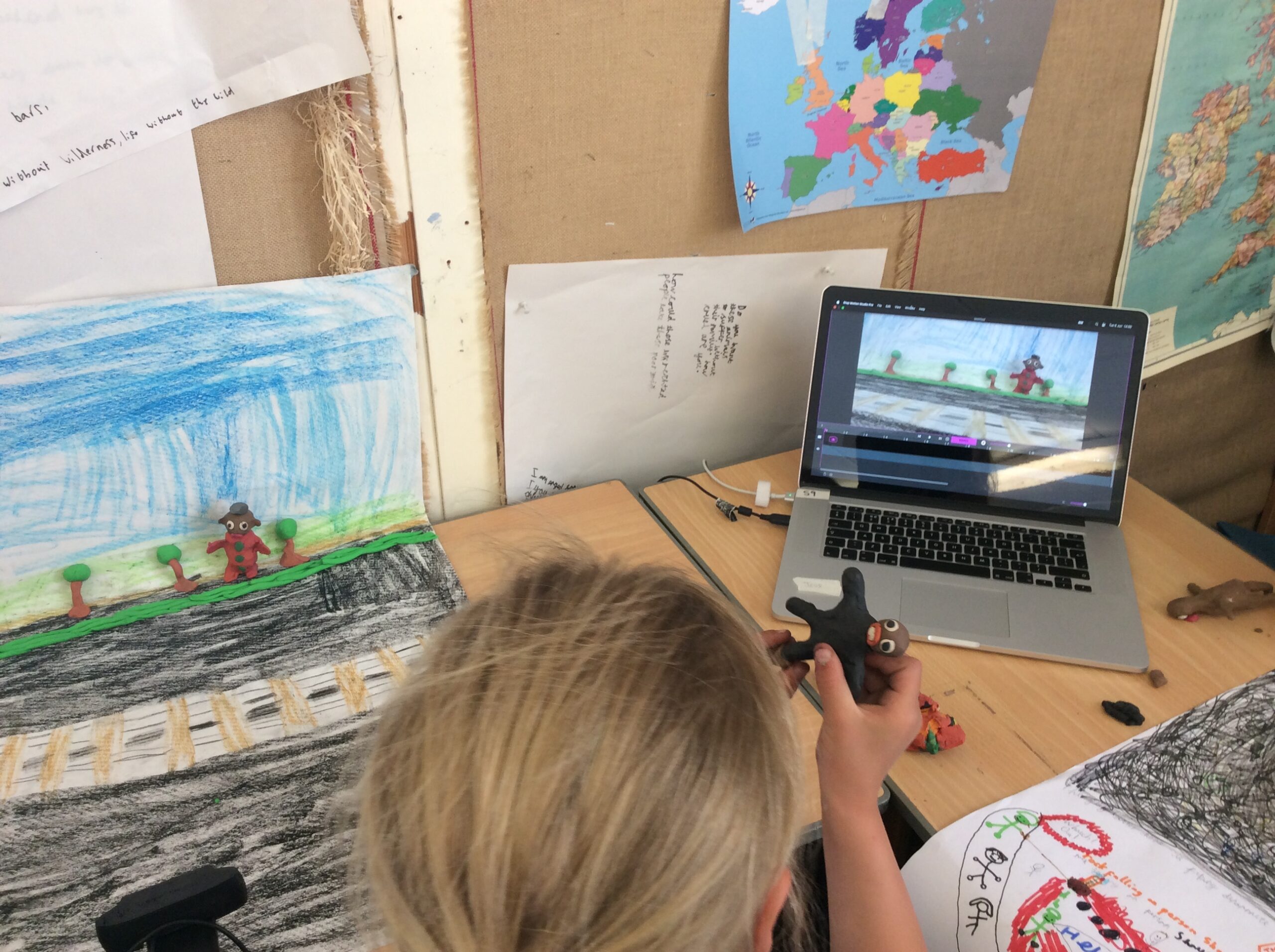
Queen’s Hall Arts were successful in securing an Everyday Heritage grant from Historic England alongside additional funding from Ray Wind Funds to work with 12 of the schools in the Haydon Bridge Partnership on a project called Beneath Our Feet.
The aim of Beneath Our Feet was for children to co-create art about the working-class lives of people involved in the heavy industries of West Northumberland. We wanted to involve pupils and teachers in researching and creating artworks relating to the historical heavy industries that are no longer visible in those areas. We involved the schools in the artist recruitment to ensure that the whole project was co-created by the participants.
Timeline
April – November 2023
Project Partners
Artists
Calum Howard, Robin Webb, Becky May and Zoe Connell.
Project Coordinator
Debbie Beeks
Schools Involved
- Allendale Primary School
- Bellingham Primary School
- Bellingham Middle School
- Greenhaugh Primary School
- Greenhead CofE Primary School
- Henshaw CofE Primary School
- Kielder Primary School
- Newbrough Primary School
- Otterburn Primary School
- Shaftoe Trust Academy
- Wark CofE Primary School
- Whitfield CofE Primary School
Key Goals
- For children and young people to explore and know the working-class heritage of our rural landscape, specifically the historical heavy industries
- Children to have a deeper connection and sense of pride of their local heritage
- Teachers and students to gain experience in recruiting and working with professional artists
- Queen’s Hall Arts to trial an approach to co-creating an arts and heritage project across multiple schools
- To engage parents and the wider community in the project
The Inspiration
Children and teachers chose four artists to collaborate with to unearth stories linked to the mining and quarrying heritage of the area, including lead, coal and mineral mines. They explored the everyday lives of the workers and their families, as well as the impact of the industry on the region and beyond.
Each school researched the historically heavy industries in their area to find out about the people who worked there. In the first sessions, the children shared their research with the artist, and then through discussion, drawing, singing and drama workshops, the pupils began to co-create their artworks.
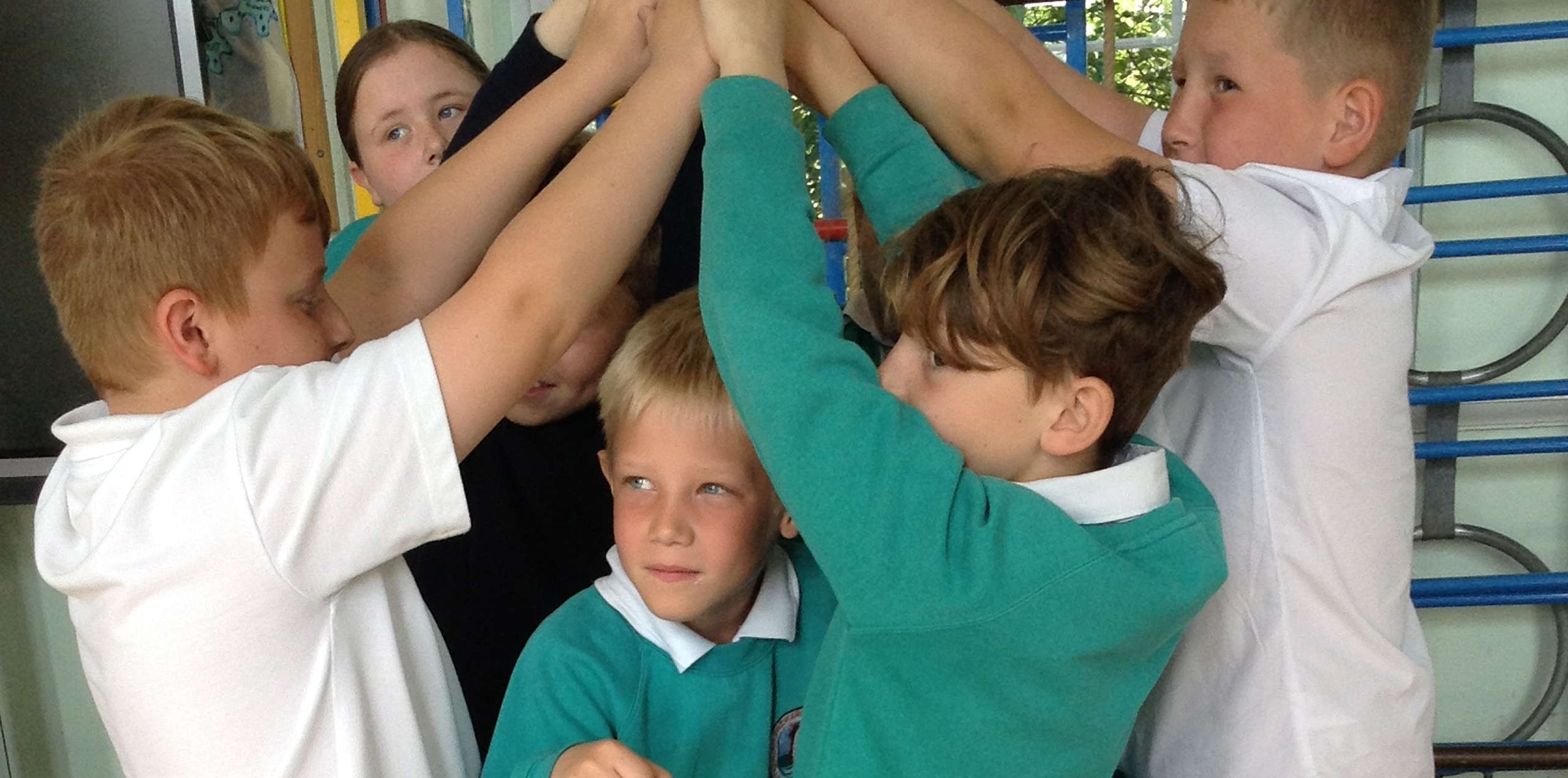
The project came about after a local Headteacher told us that the children in her school called the pit head wheel in their village ‘the bicycle wheel’. She said “Few of the pupils have any understanding of mining. It is the only visible relic of a local history that is disappearing rapidly.”
Outcomes
Co-creation as a working model
Beneath Our Feet was an action-research project to try a new way of working with schools using co-creation as a focus, where pupils and teachers help to shape the project from the beginning. Queen’s Hall Arts plan to use this model of working in our future projects with schools.
Collaborative learning
318 children took part directly in co-creating the project, the heritage research and the co-creation of art works.
Engaging the local community
12 schools held celebration assemblies to showcase the films about the project and the digital artworks with families and community guests e.g., local historians, ex-miners.
Continuing professional partnerships
One of the artist’s continued to work with one school as a result of the project.
Taking pride in our heritage
An exhibition of work took place at Queen’s Hall Arts Centre. This had an estimated footfall of 5000 visitors and very positive feedback.
Impact
Find Out More
Take a look at our projects and find out how to get involved!
MELVA: Children’s Wellbeing and Mental Health Education Through Storytelling
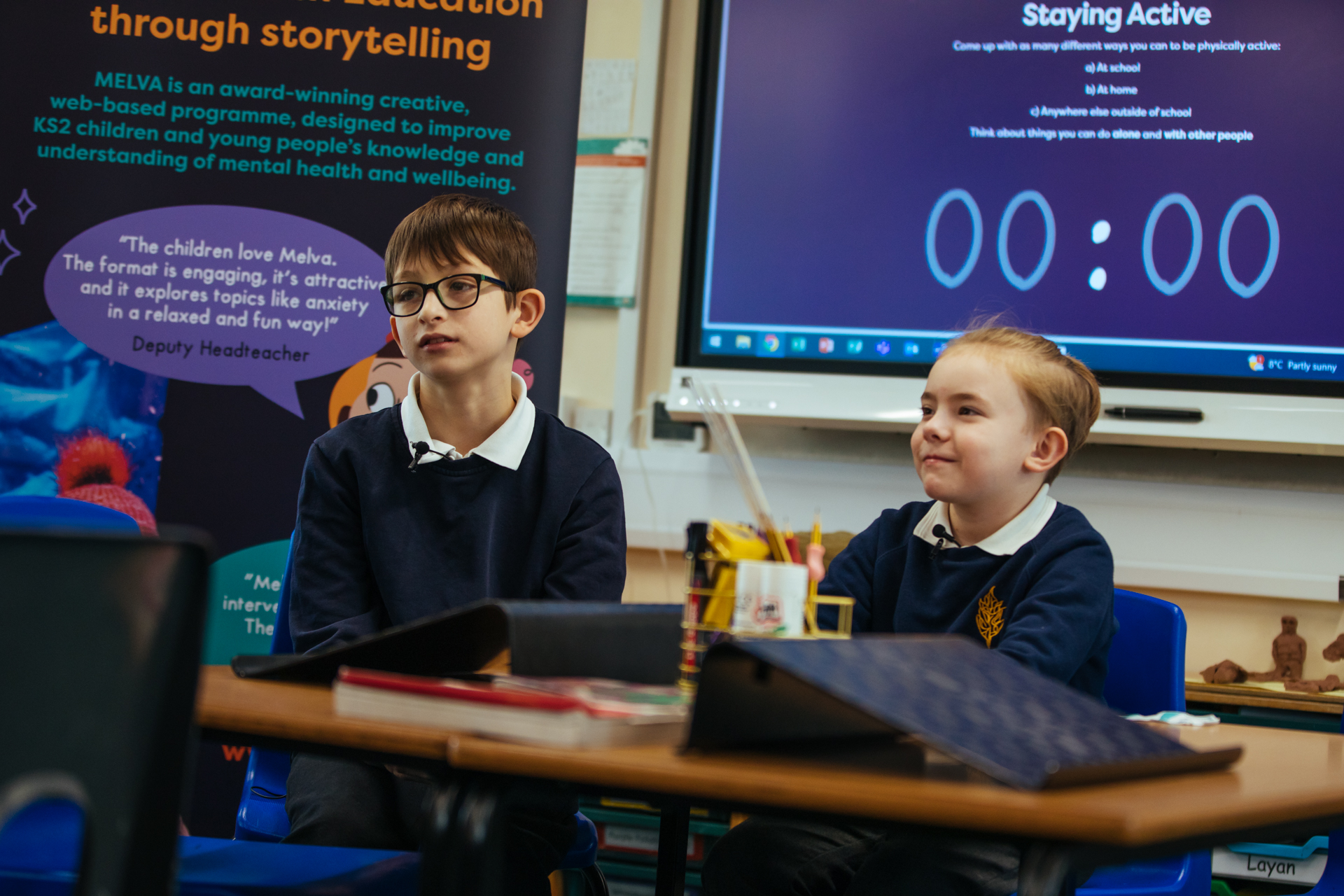
With the support of the North of Tyne Combined Authority, theatre and creative learning charity Mortal Fools made their award-winning, creative mental health programme, MELVA, available free of charge to over 50 local primary schools.
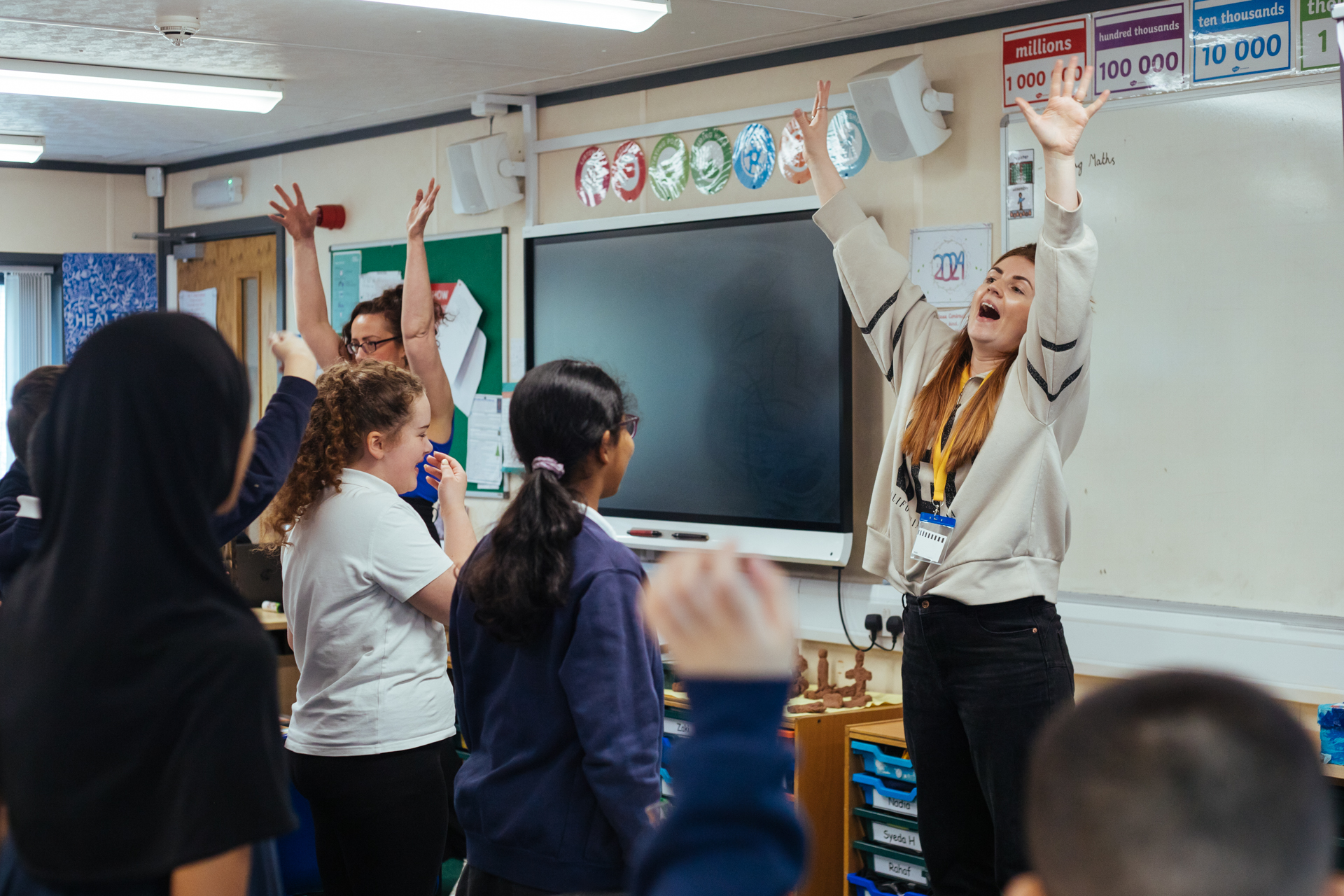
Through the MELVA programme, children engage with a range of different art forms and storytelling devices – including short animations and digital theatre – which explore mental health and wellbeing topics in an accessible, child-friendly way. These are accompanied by practical and creative activities designed to help children cultivate positive wellbeing habits and self-management techniques.
Timeline
September 2023 – July 2024
Project Partners
Creators and Producers
Mortal Fools
Collaborators
Danielle Slade – Playwright
Vida Creative – Web Developers
Key Goals
- To increase pupils’ understanding of mental health and wellbeing through creative storytelling
- To teach pupils practical self-management techniques
- To improve teachers’ confidence in addressing mental health topics in school
The Inspiration
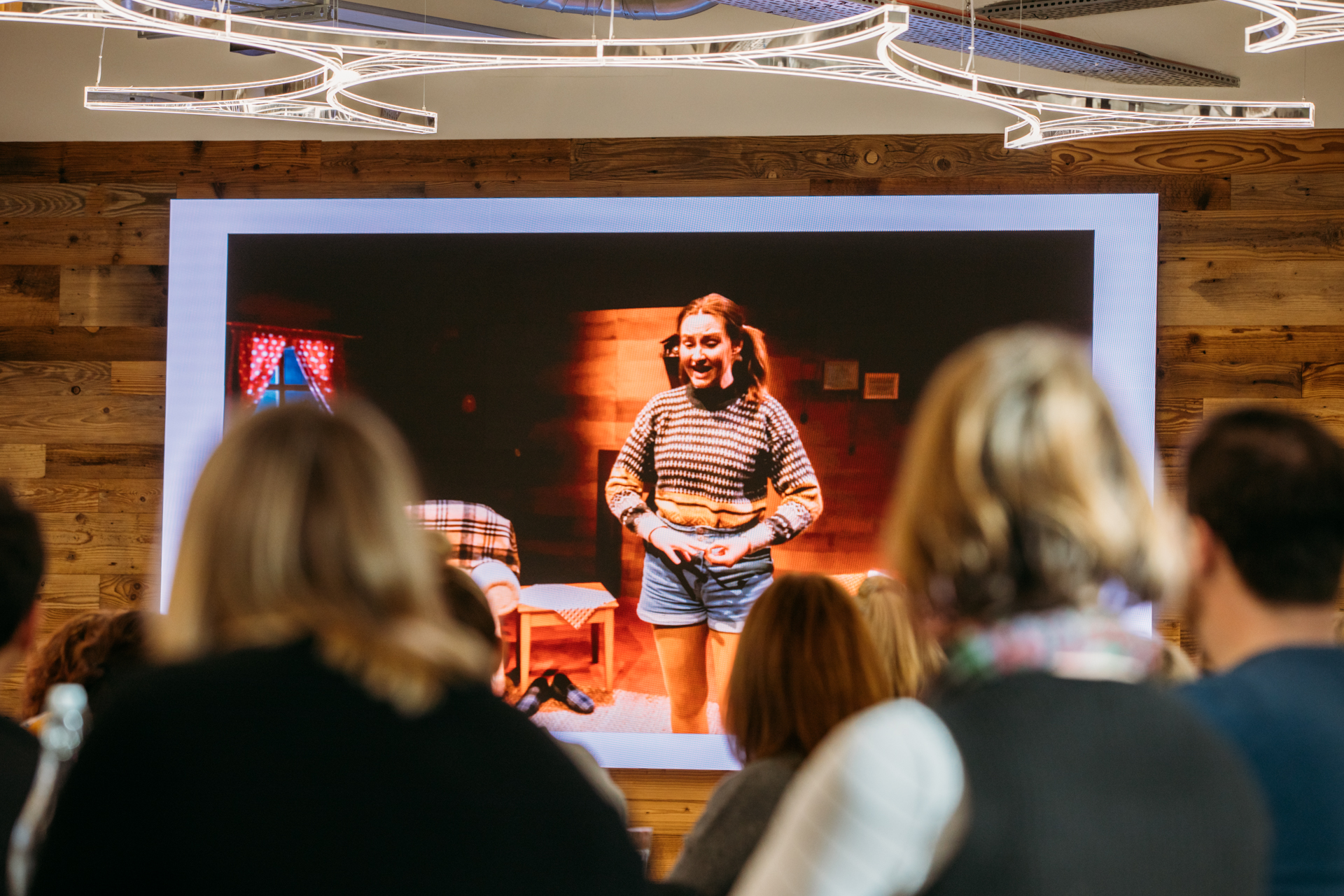
The MELVA programme began life as a children’s theatre show in Christmas 2017, telling the story of nearly-11-year-old, Melva Mapletree, as she navigates her struggles with anxiety and bereavement (or ‘worrits’ as they’re known in her world). The play was developed in consultation with children, who helped shape the character and story at every stage. Following its initial success, the play was developed into a regional schools’ tour with wraparound activities, visiting 28 North East primary schools. When the pandemic hit, Mortal Fools acted fast to transform this live programme into a fully digital resource, and today, it is used by over 100 schools and reaches 1000s of children every year.
Outcomes
Increased reach to children in the North East
Over 3,000 children participated in the MELVA digital programme between September 2023 – July 2024.
Improving knowledge and understanding
Evaluation received from a sample of schools demonstrated a 94% improvement in pupils’ understanding of mental health and wellbeing topics, and a 99% increase in their knowledge of practical self-management techniques (as rated by teachers).
Improving children’s wellbeing
Wellbeing was measured using the integrated PERMATM Framework for mental wellbeing, with every PERMATM pillar being rated highly by children in over 60% of MELVA sessions (most notably Positive Emotion, rated highly in 81% of sessions).
Empowering Teachers
Teachers reported increased confidence in addressing mental health topics in school and a greater awareness of children’s anxieties, with some describing the accompanying CPD training as ‘transformational’.
Providing sustainable strategies in schools
In academic year 24/25, North East Combined Authority renewed and expanded their funding offer to over 100 schools, with 81% of the existing school partners choosing to continue using MELVA.
Impact
Funding Partners


Find Out More
Take a look at our projects and find out how to get involved!
Creative Interventions: Building Confidence through Creativity
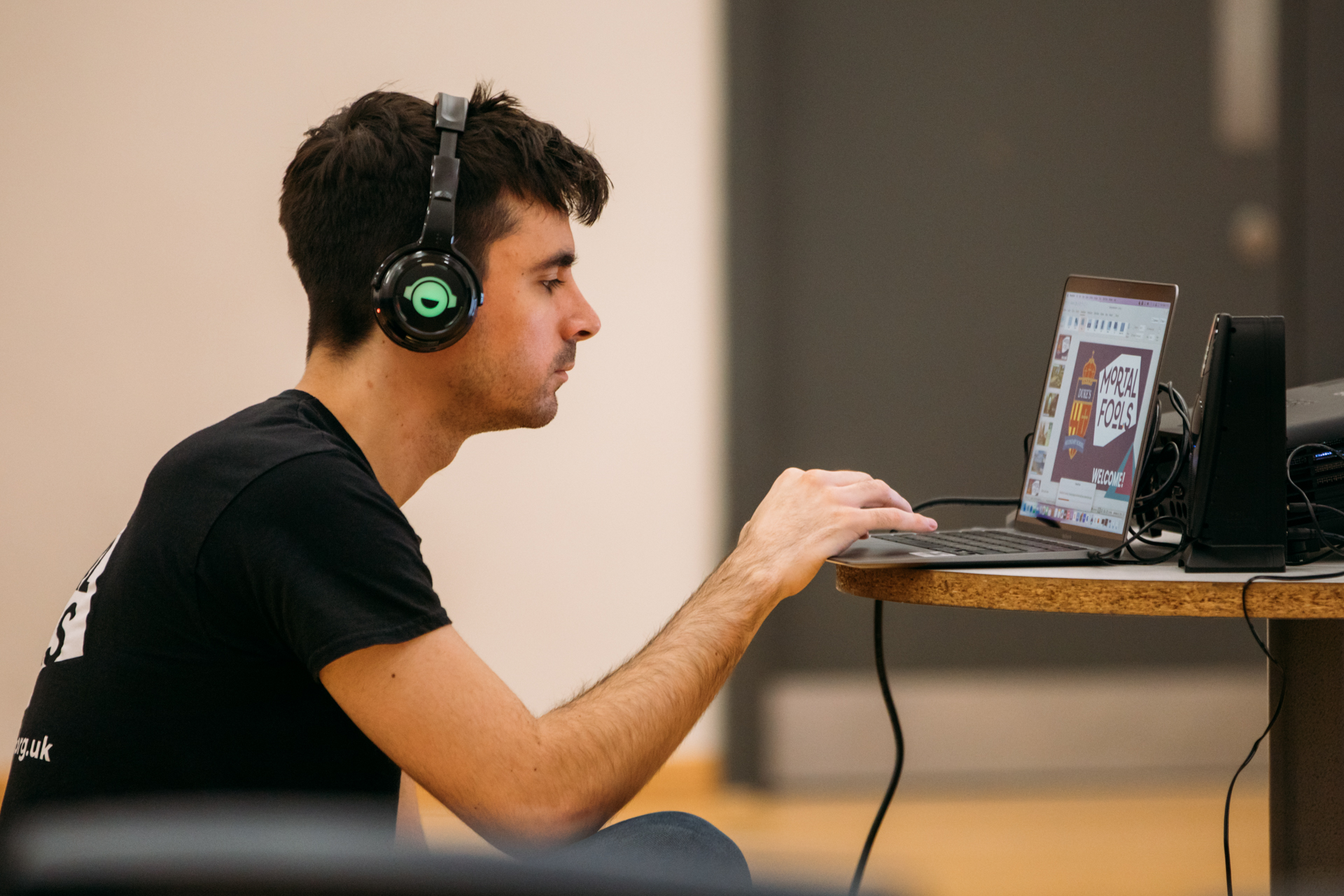
This project engaged students from Duke’s Secondary School in weekly creative sessions, working alongside artists to achieve an Explore Arts Award qualification.
The project aimed to support the development of students’ wellbeing including key skills such as confidence, teamwork, and resilience. The project theme was nature-based and included an outdoor creative session, a devised audio piece and a showcase event in school with other young people and staff.
Timeline
Spring Term 2024 and Autumn Term 2024
Project Partners
Natural England
Mortal Fools
Schools Involved
- NCEA Duke’s Secondary School
Key Goals
- To improve students’ wellbeing and skills to support them to thrive more in school and their wider lives.
- To encourage creative expression through a range of different art forms.
- To develop our long-term partnership with the school.
The Inspiration
The project specifically supported students who had been referred for support with their wellbeing and skills, due to a range of different needs and lived experiences (e.g., neurodivergence, social emotional & mental health, challenging family circumstances)
In working toward the Arts Award Explore, students made nature-based collages, imaginary maps, zines, and four soundscapes expressing their experiences of real and fantasy outdoors spaces using exploration of the actual outdoors to record Foley sound effects.
Outcomes
Accessing Arts Qualification
12 students participated and achieved an Explore Arts Award qualification.
Benefits to social and emotional wellbeing
Pupils reported increased confidence and a sense of feeling valued and listened to. They also reported improved friendships, social interaction, and trust in others.
Improved Emotional Regulation
Pupils felt that after the intervention they were better able to manage their emotions and practice emotional regulation.
Increased Confidence
The sessions enabled pupils to confidently express their thoughts and opinions in front of others, as well as feeling able to talk about their interests and express themselves through creative experiences.
Building relationships
Both pupils and school teachers felt that these interventions improved relationships in school and increased the sense of partnership between school and pupils.
Impact
Find Out More
Take a look at our projects and find out how to get involved!
Empowering Students Through Eco Textiles and Community Collaboration
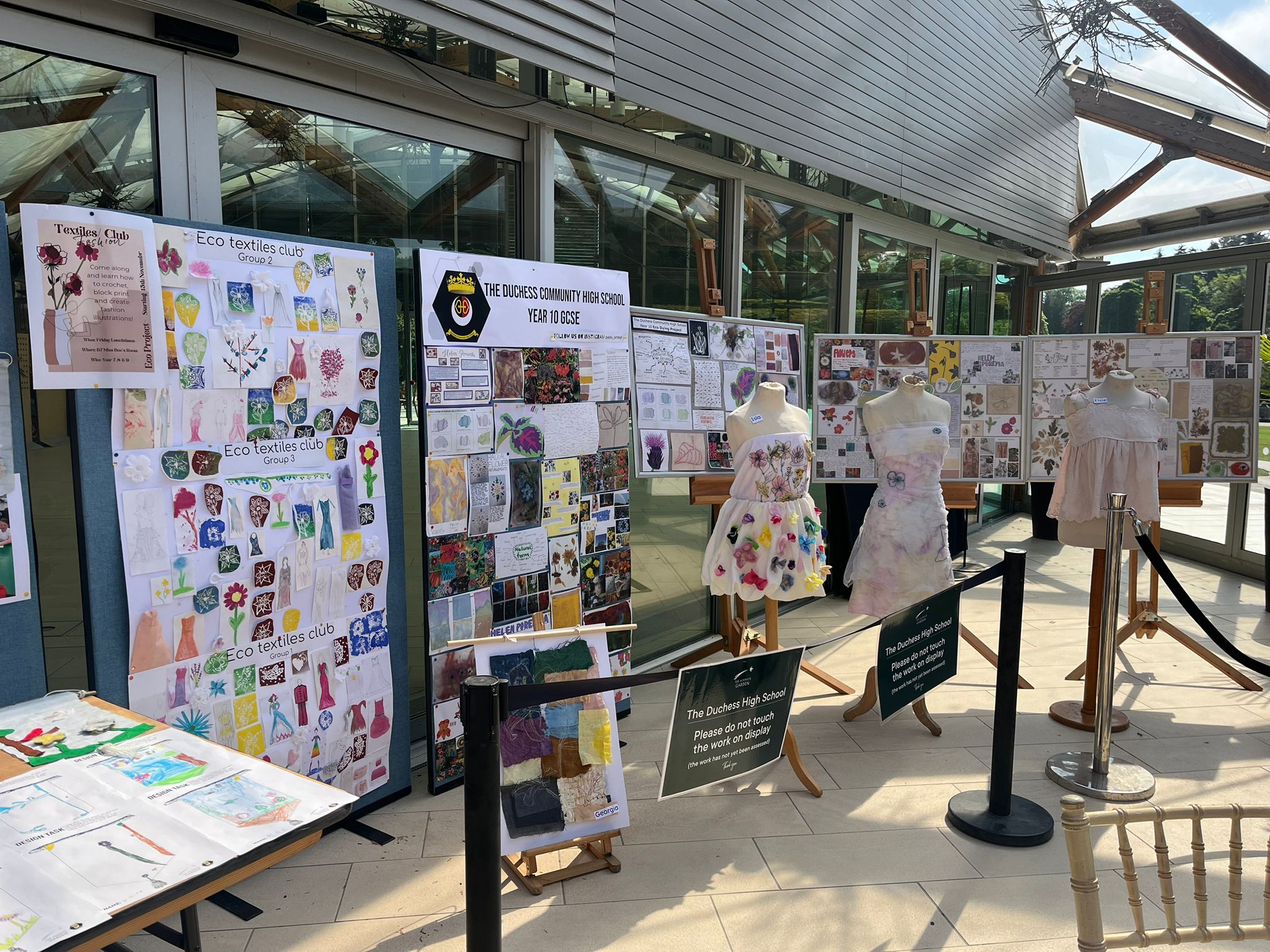
This project empowered DCHS students to explore sustainable Textiles through the Eco Project in partnership with The Alnwick Garden. It expanded creative learning opportunities for both secondary and primary pupils, with students leading workshops, exhibiting their work, and engaging with the wider community.
Timeline
Ongoing project since 2024, with key developments in the 2024-2025 academic year
Project Partners
Organisations
The Alnwick Garden Education Team
Schools Involved
- Duchess’s Community High School (DCHS)
- Swansfield Park Primary School
- Seahouses Primary School
- Shilbottle Primary School
Key Goals
- Develop sustainable textiles knowledge through creative practice
- Build leadership skills and confidence in older students
- Connect primary and secondary pupils through shared creative experiences
- Strengthen school partnerships with arts organisations
- Provide public exhibition opportunities for student work
The Inspiration
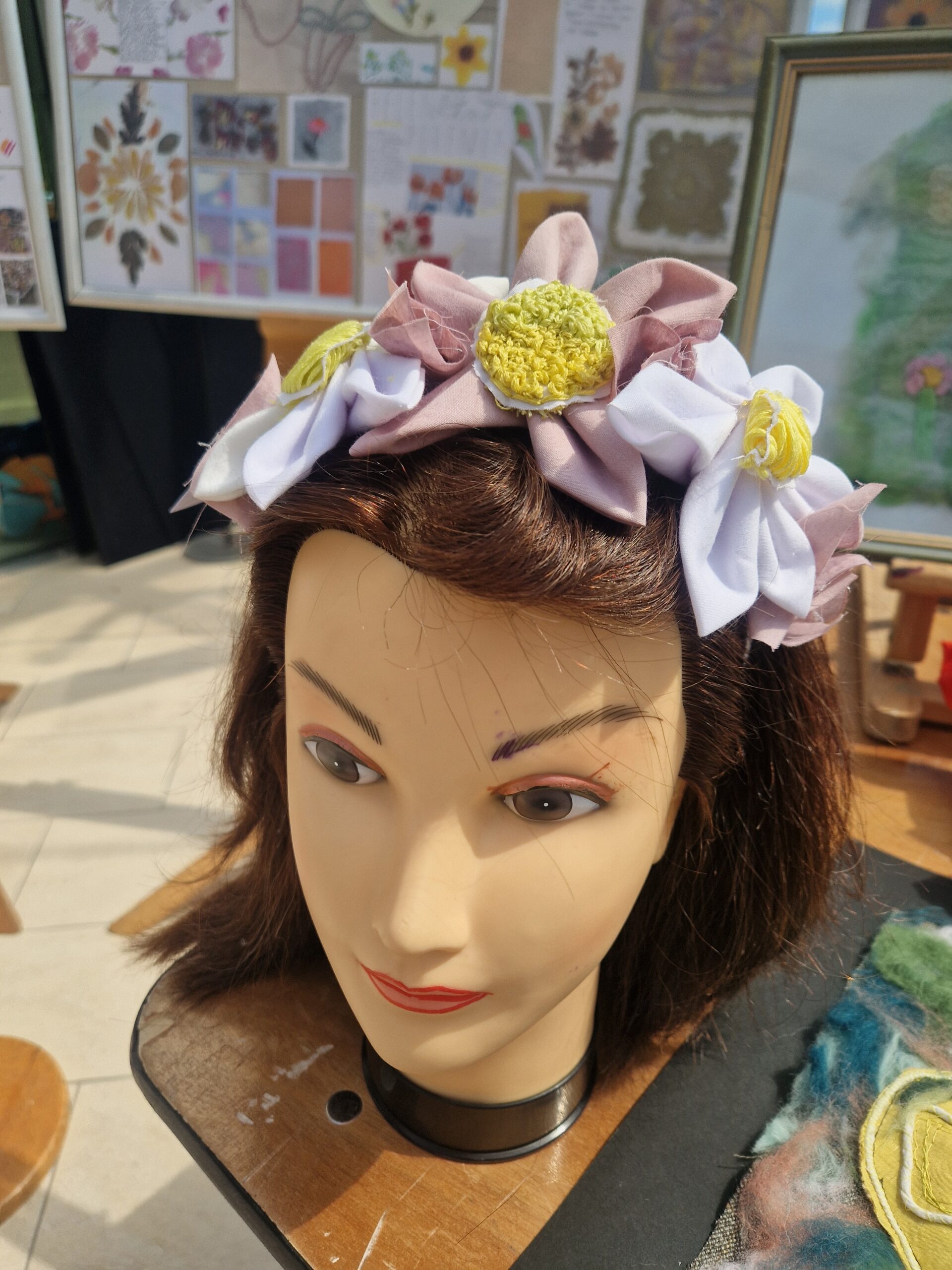
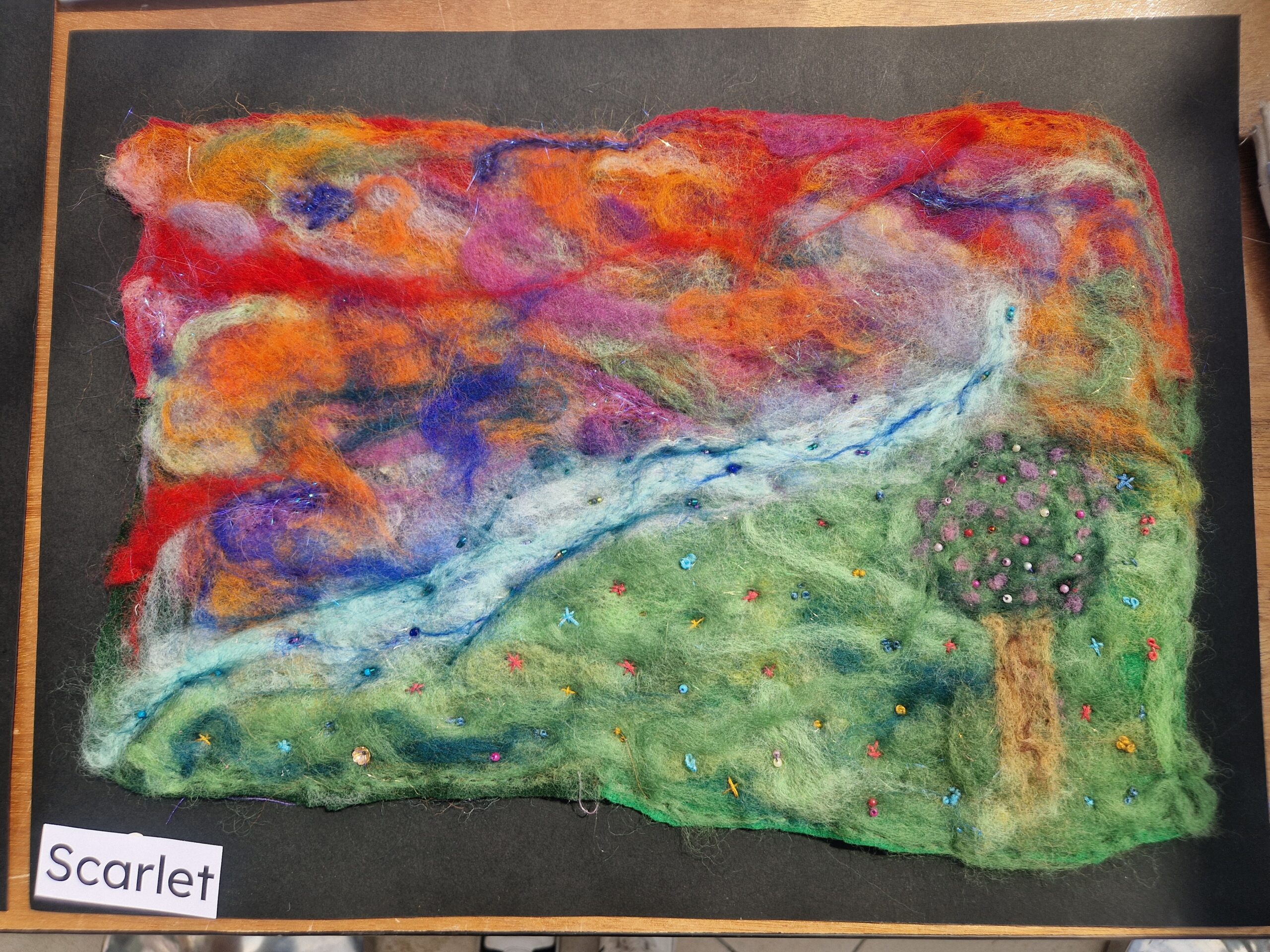
The Eco Project was developed as a Textiles initiative that introduces students to natural dyeing and sustainable practices.
Students learned to use plant-based dyes to create meaningful artwork. Older pupils took on leadership roles, supporting a weekly Textiles Club and leading workshops at local primary schools.
The project expanded to include tailored schemes of work for both GCSE classes and primary cohorts. Collaboration with The Alnwick Garden enabled the project to culminate in a public exhibition and laid the foundation for future events, such as a proposed “Primary Planting Day.”
Outcomes
Community Collaboration
Over 20 students from DCHS participated in workshops and exhibitions and three local primary schools engaged in the extended project, working with a key community organisation to produce a successful final exhibition.
Developing Leadership Skills
The year 12 students from DCHS used this opportunity to develop leadership skills as part of The Gold Arts Award. This Level 3 qualification is young person-led and encourages creativity and independent learning.
Improving Creativity Standards in School
Work on this project led to The Duchess’ Community High School being awarded a Platinum Artsmark Award, accredited by Arts Council England. The Artsmark Award is the only creative quality standard for schools and education settings in England, where schools are recognised for their exceptional commitment to creativity.
Developing Professional Skills and Confidence
Working with subject specific teachers and Y12 students strengthened the confidence of primary teachers in delivering Textiles content in their individual settings
Impact
Find Out More
Take a look at our projects and find out how to get involved!