Local School gives Royal Approval to Ad Gefrin’s Great Hall and Museum
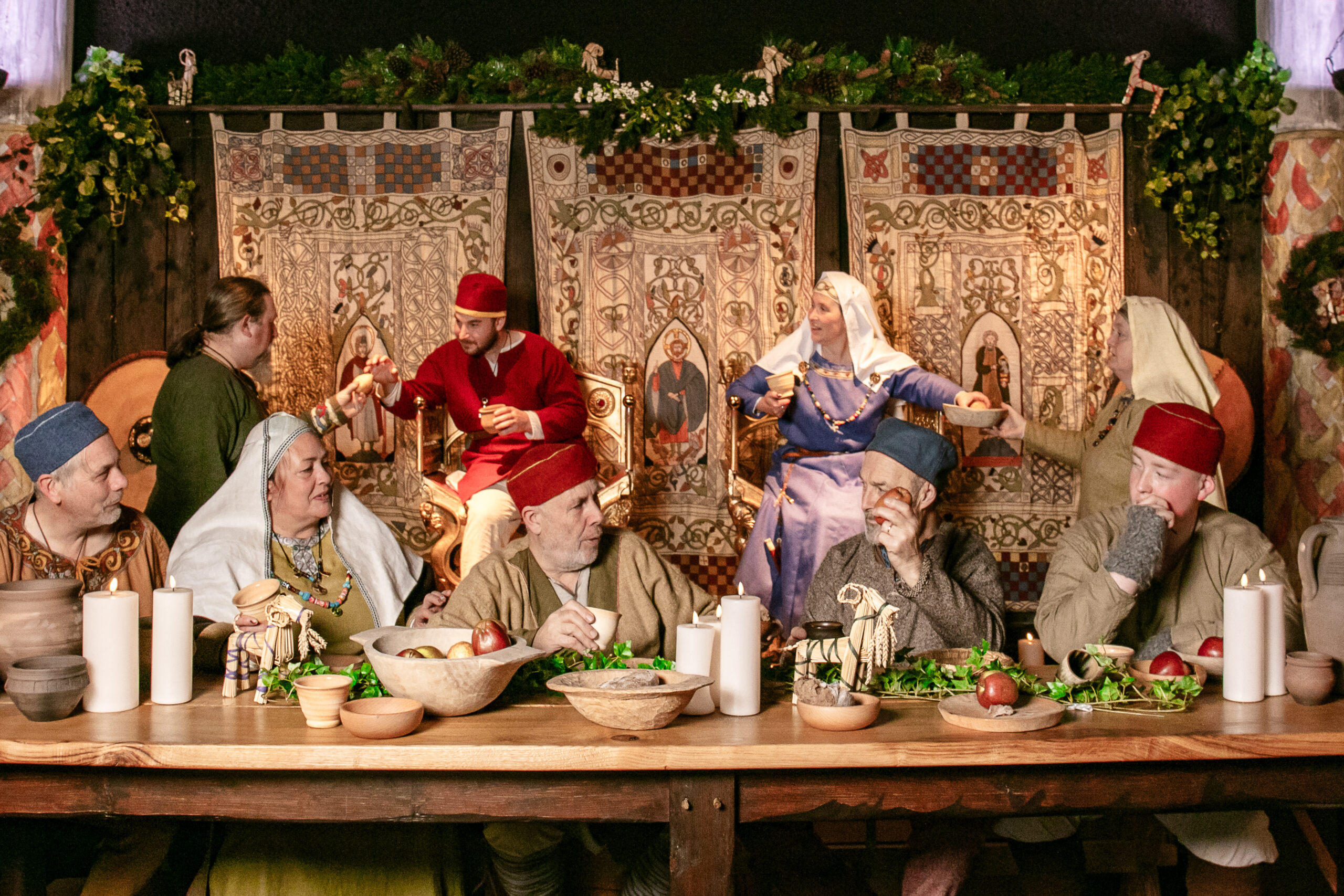
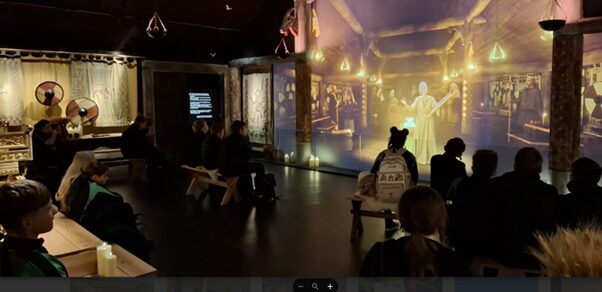
Bede Academy took Year 7 to Ad Gefrin to support the curriculum on Northumbrian Saints. A staff member visited the museum and was so impressed with the audio visual, they felt this was a brilliant way to tell the stories of Edwin, Oswald and Aidan.
The way this unit is taught in school incorporates evidence from the archaeological dig in Bamburgh, so the artifacts in the museum adds real value to this as a way of finding out about early medieval Northumbria. The trip was run as a joint History and Geography visit, due to the location of the site at Yeavering, which opened up discussions on the geography of the area and why this might have been chosen as a suitable site for the summer palace of the 7th Century Kings and Queens.
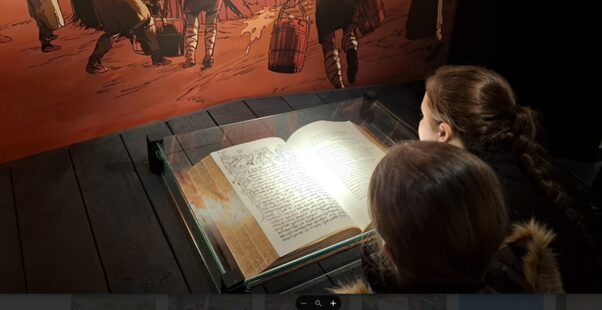
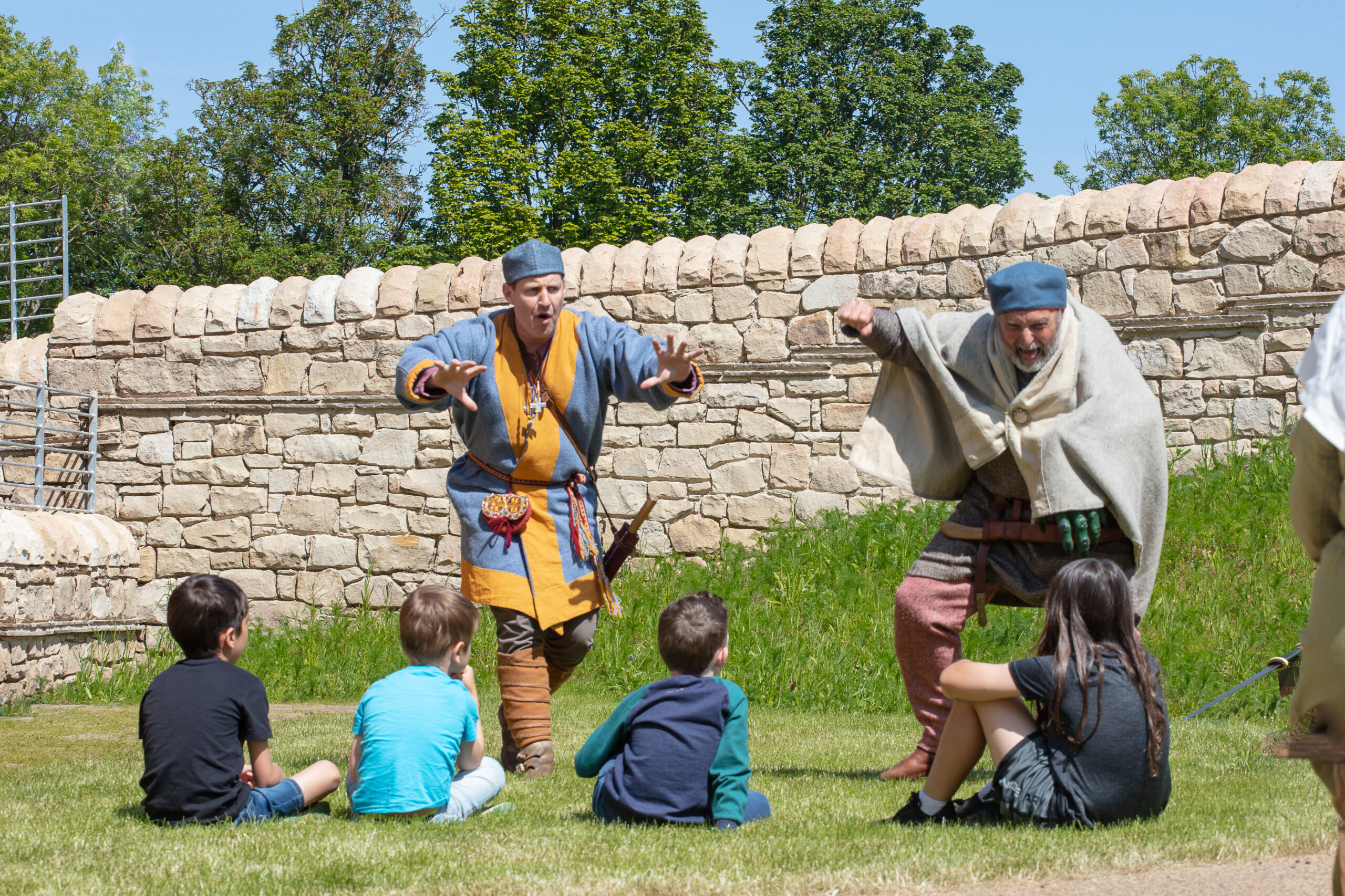
Bede Academy brought 60 students each day over four days. Thirty pupils went to the museum in the morning, and moved between the audio-visual and museum with demonstrations of Anglo Saxon weapons, games, and runes – as well as free time to explore.
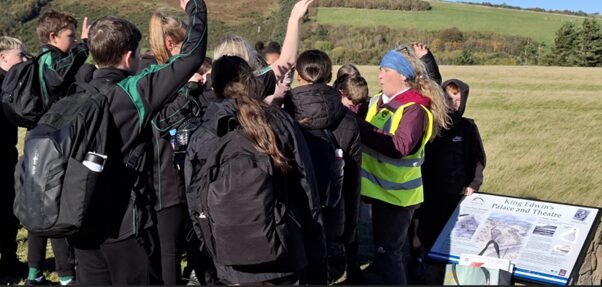
The other 30 went to the field at Yeavering and explored the site looking at the geographical context, then marking out its limits and discussing the changing use of the site from prehistory to the Anglo Saxon period. This allowed discussion about the change in geography over time, and migration. Discussions around recent archaelogical digs allowed the school to emphasis the fact that interpretations of history develop over time.
The students enjoyed learning outside the classroom and having the opportunity to ask Ad Gefrin’s experts about the Golden Age of Northumbria and the world of the Anglo-Saxons.
The ability to be immersed in the audio visual of the re-imagined Great Hall and spending time at the site itself at Yeavering, helped visualise what life might have been like and why certain decisions like the palace location were taken.
Student enjoyment and engagement was high – Bede Academy is now the process of developing a meaningful visit for each year group in History and recommends this trip to History leads from other schools to underpin the Y7 curriculum on Northumbrian Saints.
Timeline
Ongoing
Project Partners
Organisations
Durham University
The Gefrin Trust
Schools Involved
- Bede Academy
Key Goals
- To get pupils learning out of the classroom and within the Northumberland countryside to see that learning about history can happen in a variety of settings
- To complement students’ in class learning – adding to their knowledge of the story of Edwin and Aidan by meeting experts from the museum and seeing real artefacts.
- To challenge critical thinking around themes such as power, equality, language, landscape and religion
- To engage children, parents and the wider community and raise their knowledge of local history
The onsite re-imagined Great Hall and museum at Ad Gefrin gives students an immersive experience into life at the 7th century Summer palace of the Kings and Queens of Northumbria, with artefacts from national collections such as The British Museum. Schools are able to take a trip to the archaeological site at Yeavering to stand on the hillside where the royal settlement was and walk where the Kings and Queens had stepped before
Ad Gefrin can tailor school visits and worksheets to link with the curriculum . They can also offer Ad Gefrin ‘on the road’, when a staff member (or even an Anglo Saxon) will come to school bringing replica artifacts for an interactive session. Ad Gefrin are currently working on loans boxes for schools to hire to deliver content in class.
The idea behind Ad Gefrin’s education programme is to bring an interactive/immersive experience to students, resulting in better engagement and understanding of a largely untold period of our past. This sits between the Roman and Viking eras, but during a time when Northumbria was pre-eminent in the world for its power and culture.
People travelled from North Africa, Europe, and Scandinavia to be at the court of King Edwin and King Oswald and to witness the first conversions of the Northumbrians to Christianity. This was at the cusp of moving from oral tradition to the written tradition so the perfect context for exploring language as well as history and geography.
Outcomes
Interactive Learning
The visit helped students to retain information they learnt during the trip, which was evidenced when they clearly included factual knowledge from the visit in the end-of-unit assessments.
Shared Experiences
These types of experiences help form bonds and friendships through shared experiences and lasting memories taken on to adulthood.
Developing Relationships
Bede Academy used this opportunity for form tutors to accompany their new Y7 classes, which deepened emerging relationships. It also gave history staff time to get to know a wider range of the new intake.
Impact
Find Out More
Take a look at our projects and find out how to get involved!



VE Day 80th Celebrations Tea Dance workshops with schools around Berwick

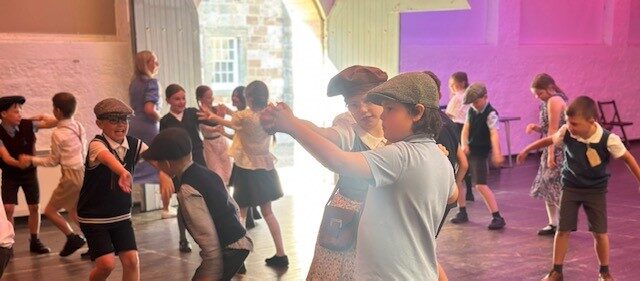
Over 200 school pupils from Berwick-upon-Tweed collaborated with creatives and subject experts to explore WWII and the significance of VE Day through two interactive workshops. The first, an in-school session, focused on life during the war both at home and abroad. The second, a Tea Dance workshop held at The Gymnasium Gallery, brought history to life through movement, as pupils learned two classic 1930s dances. This engaging approach not only commemorated the 80th anniversary of VE Day but also reinforced classroom learning in a dynamic and memorable way.
Timeline
April 2025- May 2025
Project Partners
Artists
Oli Brooks – Dance Artist and Choreographer
Organisations
The Maltings (Berwick) Trust
Berwick Record Office
King’s Own Scottish Borderers Museum
Schools Involved
- Allendale Primary School
- Scremerston School
- Berwick Middle School
- Tweedmouth West First School
- St Mary’s First School (Berwick)
- Holy Trinity C of E First School
- Spittal Community First School
- St Mary’s First School (Norham)
- St Cuthbert’s First School
- The Grove SEND School
- Tweedmouth Prior Park First School
Key Goals
- To increase pupils’ understanding of WWII history
- To celebrate VE Day 80th Anniversary in an engaging and interactive manner
- To build stronger connections between schools and local artists
- To allow pupils to have an opportunity to be creative with movement
The Maltings (Berwick) Trust’s creative engagement team delivered a series of workshops through April to May, working alongside Living Barracks Partners Berwick Archivist, Linda Bankier and King’s Own Scottish Borderers’ Veteran, Education and Outreach Officer, Peter McCutcheon.
The Dance workshops were delivered by West End performer Oli Brooks, and the team engaged with 10 local schools in a participatory workshop programme to commemorate VE Day 80th anniversary and inspire learning about WWII. The workshops were adapted towards the level of ability, and included pupils with additional support needs, ranging through the different year groups resulting in each class receiving a tailored educational experience. Despite initial time constraints, the collaboration was highly successful and led to pupils learning and engaging in with topic and with dance in a practical and interactive manner.

Outcomes
Over 210 pupils participated in the VE Day workshops
Increased student confidence in discussing topics relating to WWII
Strengthened links between the schools and local artists
Over 210 pupils learned a new skill of tea dancing
Impact
Find Out More
Take a look at our projects and find out how to get involved!
Students make Berwick Shine

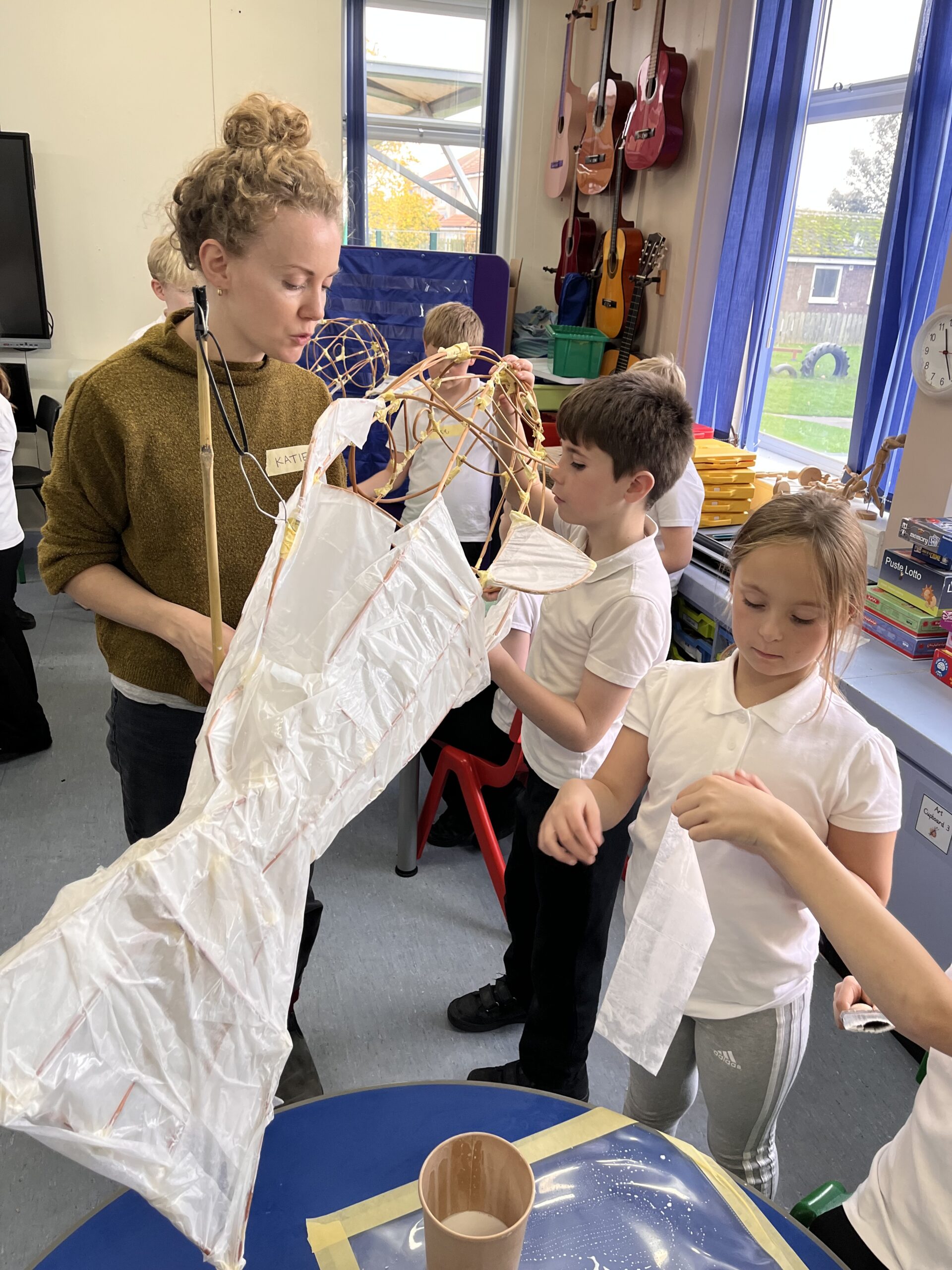
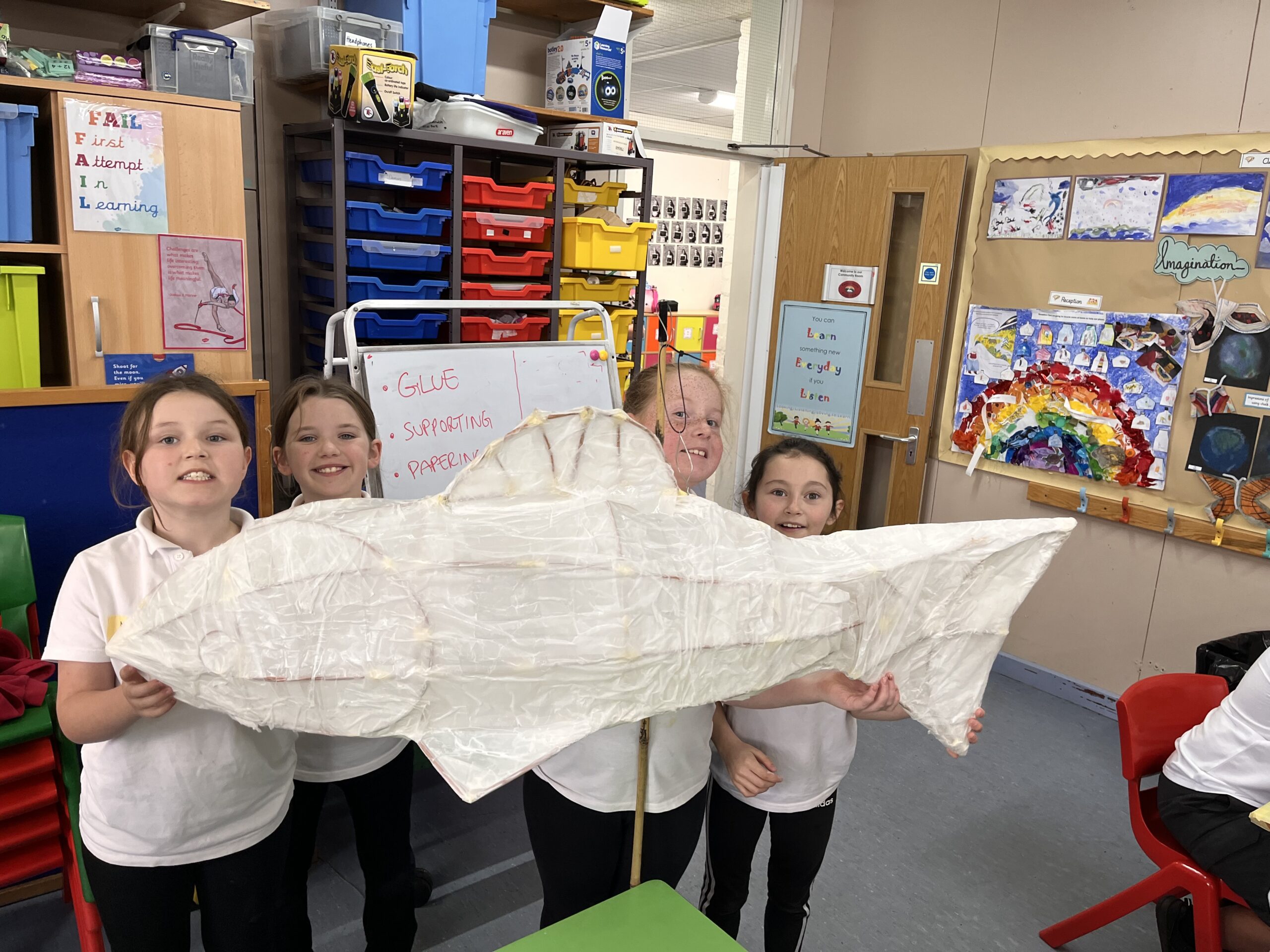
Five schools in Berwick upon Tweed worked with artist Martha Ellis and The Maltings (Berwick) Trust to create a shoal of willow salmon lanterns that lit up the town over winter.
Inspired by the medieval tradition of lanterns in the town detailed in historic documents in the archives as far back as 1604, and the tradition of salmon fishing on the River Tweed, the project combined history, heritage and creativity with opportunities for showcasing lanterns across the town to light up Berwick during the winter months.
Funding for the project was provided by Arts Council England, through the UK Government’s Cultural Development Fund.
Timeline
November 2024 – January 2025
Project Partners
Artists
Martha Ellis
Organisations
The Maltings (Berwick) Trust
Berwick Record Office
King’s Own Scottish Borderers Museum
English Heritage
Schools Involved
- Tweedmouth Prior Park First School
- Berwick Academy
- St Cuthbert’s RC First School
- Tweedmouth Community Middle School
- The Grove SEND School
Key Goals
- To increase pupils’ understanding of local heritage and history
- To allow pupils to explore technical 3D construction at scale
- To build on teamwork within the school setting
- To build stronger connections between schools, artists and community
- To showcase creative outputs across the town
The Inspiration
The project emerged from an artist call-out for The Living Barracks project, a multi-partner programme to restore and redevelop Berwick Barracks including a cultural development strand of artist-led residencies and commissions which is produced by The Maltings (Berwick) Trust. The proposal from Martha Ellis combined large scale sculptural techniques with visible and inspiring outcome.
The project took place across 5 different schools from Year 4 to Year 12 pupils. The artist adapted workshop methods to the level of ability some classes worked in teams to make one lantern, older pupils worked on individual pieces and pupils with additional needs focused on sensory elements to build collaborative lanterns.
Outcomes
Pupil Participation
98 pupils across 5 schools participated in workshops and created a total of 37 large salmon lanterns
Strengthening links in the community
The project strengthened existing links and created new links with schools and teachers and created new links with local businesses who hosted lanterns over the Christmas period complete with an interactive town trail
Building new traditions in Berwick
Lanterns were carried by school pupils in a community lantern procession to mark the switching on of the town’s Christmas lights. There are now plans for an annual lantern procession at Christmas and the lanterns are planned to be used for more community gala events
Impact
Find Out More
Take a look at our projects and find out how to get involved!
A Co-Creation Project with schools to learn about working class histories in West Northumberland
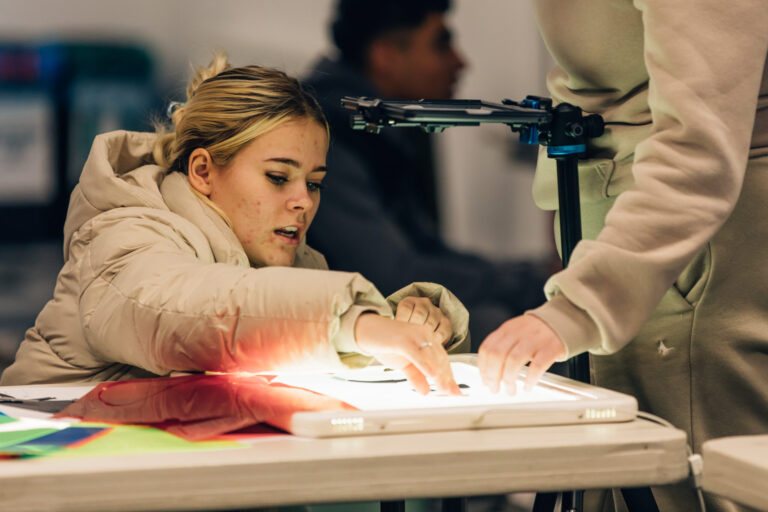
Queen’s Hall Arts were successful in securing an Everyday Heritage grant from Historic England alongside additional funding from Ray Wind Funds to work with 12 of the schools in the Haydon Bridge Partnership on a project called Beneath Our Feet.
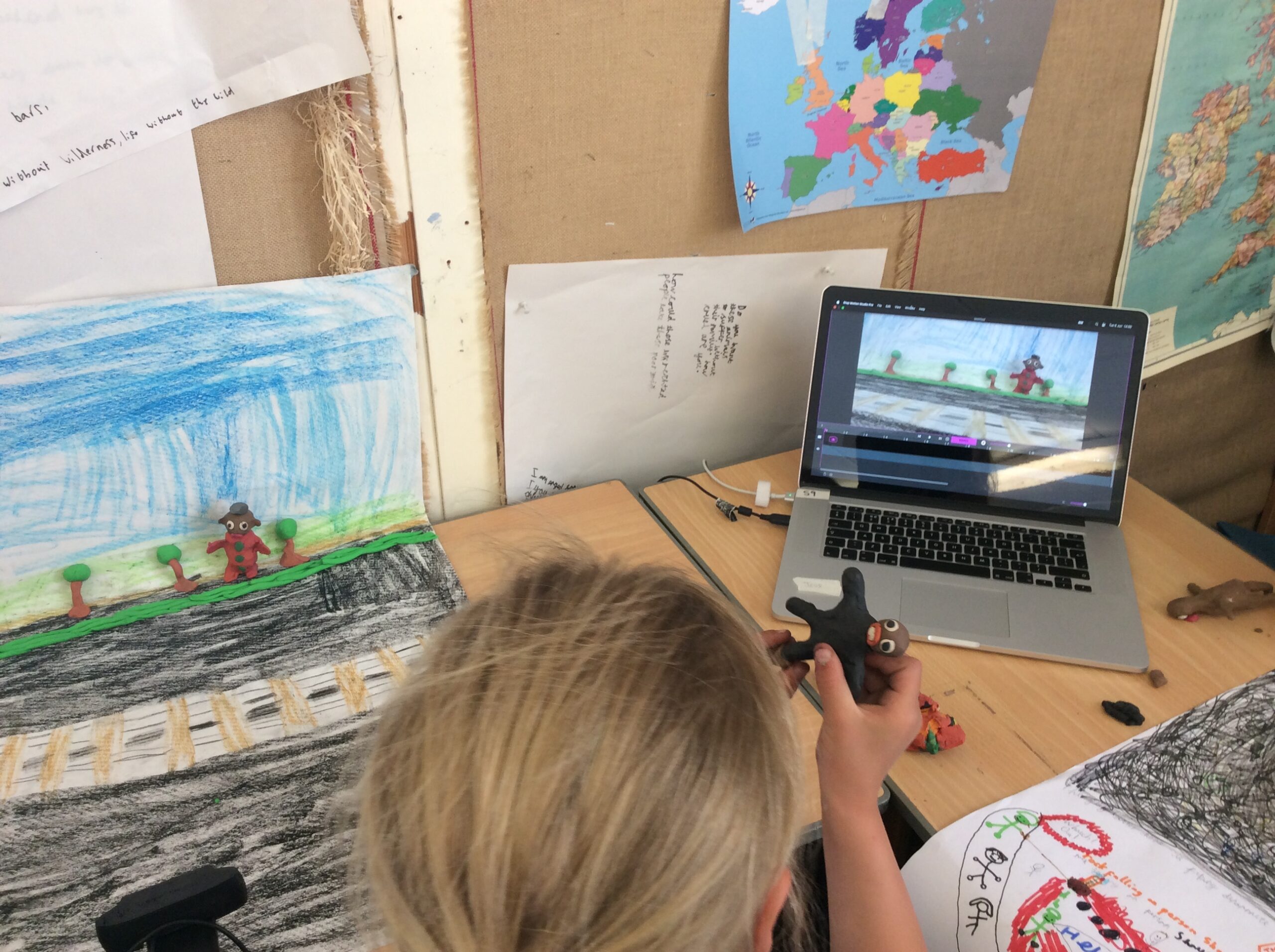
The aim of Beneath Our Feet was for children to co-create art about the working-class lives of people involved in the heavy industries of West Northumberland. We wanted to involve pupils and teachers in researching and creating artworks relating to the historical heavy industries that are no longer visible in those areas. We involved the schools in the artist recruitment to ensure that the whole project was co-created by the participants.
Timeline
April – November 2023
Project Partners
Artists
Calum Howard, Robin Webb, Becky May and Zoe Connell.
Project Coordinator
Debbie Beeks
Schools Involved
- Allendale Primary School
- Bellingham Primary School
- Bellingham Middle School
- Greenhaugh Primary School
- Greenhead CofE Primary School
- Henshaw CofE Primary School
- Kielder Primary School
- Newbrough Primary School
- Otterburn Primary School
- Shaftoe Trust Academy
- Wark CofE Primary School
- Whitfield CofE Primary School
Key Goals
- For children and young people to explore and know the working-class heritage of our rural landscape, specifically the historical heavy industries
- Children to have a deeper connection and sense of pride of their local heritage
- Teachers and students to gain experience in recruiting and working with professional artists
- Queen’s Hall Arts to trial an approach to co-creating an arts and heritage project across multiple schools
- To engage parents and the wider community in the project
The Inspiration
Children and teachers chose four artists to collaborate with to unearth stories linked to the mining and quarrying heritage of the area, including lead, coal and mineral mines. They explored the everyday lives of the workers and their families, as well as the impact of the industry on the region and beyond.
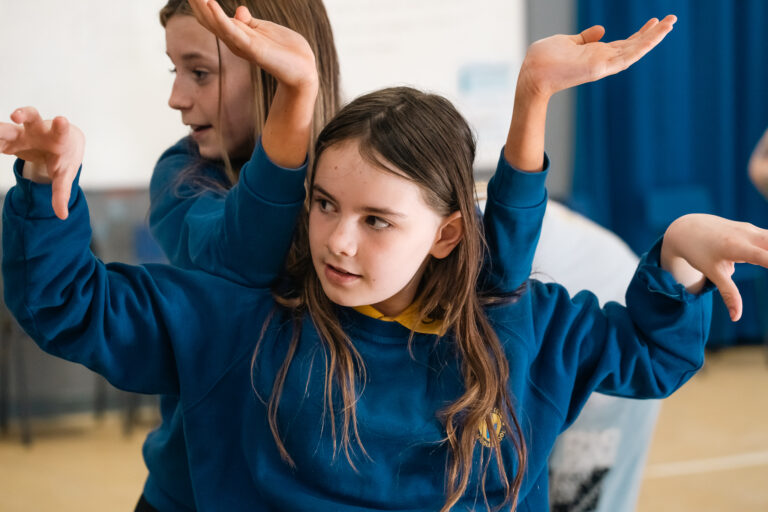
Each school researched the historically heavy industries in their area to find out about the people who worked there. In the first sessions, the children shared their research with the artist, and then through discussion, drawing, singing and drama workshops, the pupils began to co-create their artworks.
The project came about after a local Headteacher told us that the children in her school called the pit head wheel in their village ‘the bicycle wheel’. She said “Few of the pupils have any understanding of mining. It is the only visible relic of a local history that is disappearing rapidly.”
Outcomes
Co-creation as a working model
Beneath Our Feet was an action-research project to try a new way of working with schools using co-creation as a focus, where pupils and teachers help to shape the project from the beginning. Queen’s Hall Arts plan to use this model of working in our future projects with schools.
Collaborative learning
318 children took part directly in co-creating the project, the heritage research and the co-creation of art works.
Engaging the local community
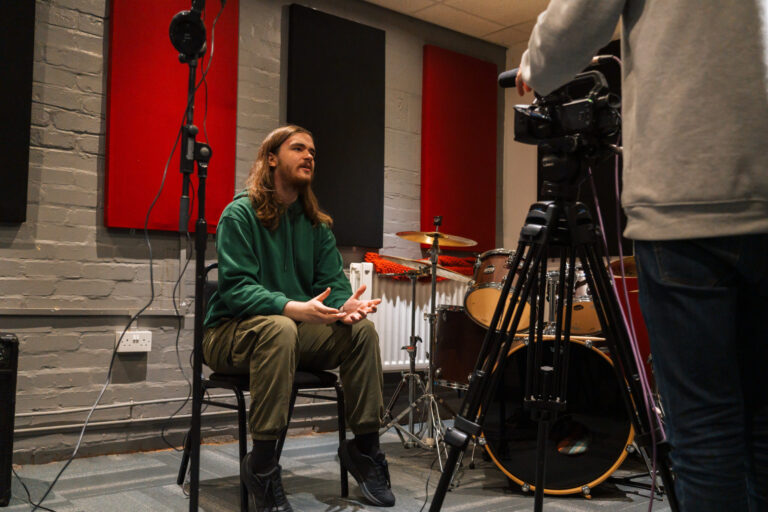
12 schools held celebration assemblies to showcase the films about the project and the digital artworks with families and community guests e.g., local historians, ex-miners.
Continuing professional partnerships
One of the artist’s continued to work with one school as a result of the project.
Taking pride in our heritage
An exhibition of work took place at Queen’s Hall Arts Centre. This had an estimated footfall of 5000 visitors and very positive feedback.
Impact
Find Out More
Take a look at our projects and find out how to get involved!
Creative Interventions: Building Confidence through Creativity
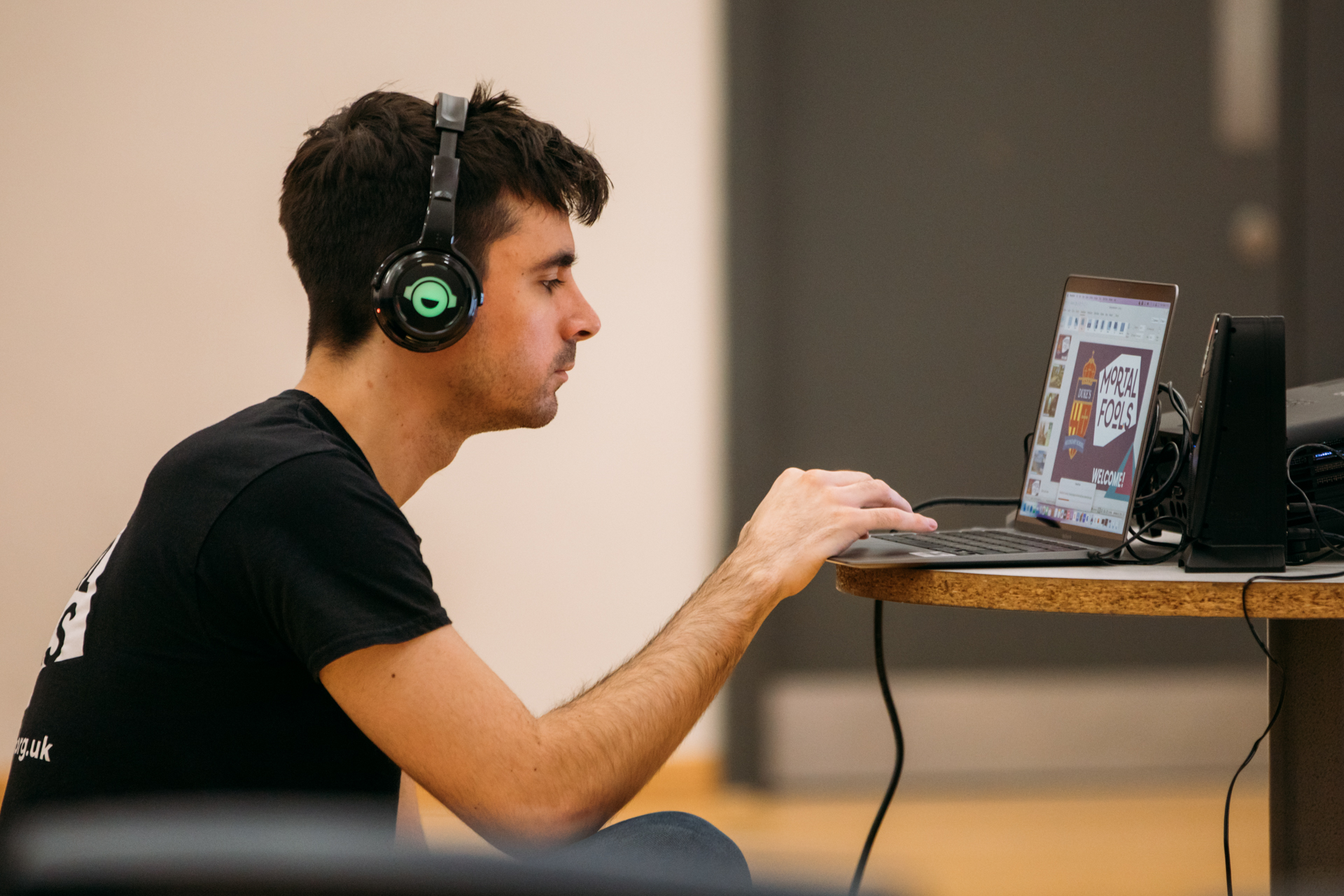
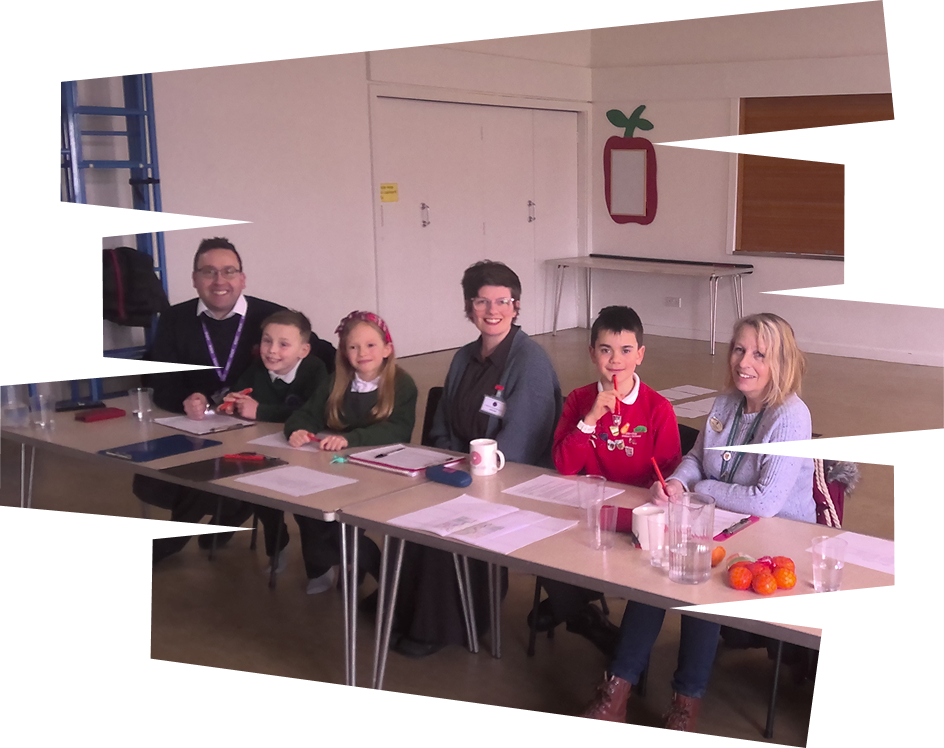
This project engaged students from Duke’s Secondary School in weekly creative sessions, working alongside artists to achieve an Explore Arts Award qualification.
The project aimed to support the development of students’ wellbeing including key skills such as confidence, teamwork, and resilience. The project theme was nature-based and included an outdoor creative session, a devised audio piece and a showcase event in school with other young people and staff.
Timeline
Spring Term 2024 and Autumn Term 2024
Project Partners
Natural England
Mortal Fools
Schools Involved
- NCEA Duke’s Secondary School
Key Goals
- To improve students’ wellbeing and skills to support them to thrive more in school and their wider lives.
- To encourage creative expression through a range of different art forms.
- To develop our long-term partnership with the school.
The Inspiration
The project specifically supported students who had been referred for support with their wellbeing and skills, due to a range of different needs and lived experiences (e.g., neurodivergence, social emotional & mental health, challenging family circumstances)
In working toward the Arts Award Explore, students made nature-based collages, imaginary maps, zines, and four soundscapes expressing their experiences of real and fantasy outdoors spaces using exploration of the actual outdoors to record Foley sound effects.
Outcomes
Accessing Arts Qualification
12 students participated and achieved an Explore Arts Award qualification.
Benefits to social and emotional wellbeing
Pupils reported increased confidence and a sense of feeling valued and listened to. They also reported improved friendships, social interaction, and trust in others.
Improved Emotional Regulation
Pupils felt that after the intervention they were better able to manage their emotions and practice emotional regulation.
Increased Confidence
The sessions enabled pupils to confidently express their thoughts and opinions in front of others, as well as feeling able to talk about their interests and express themselves through creative experiences.
Building relationships
Both pupils and school teachers felt that these interventions improved relationships in school and increased the sense of partnership between school and pupils.
Impact
Find Out More
Take a look at our projects and find out how to get involved!